

Beef shank bones are a culinary treasure that makes meals special. They come from the legs of cattle and add depth to many dishes. Whether you cook at home or in a restaurant, knowing about beef soup bones can improve your cooking.
The beef shank bone is more than just meat. It’s a versatile ingredient that blends old cooking methods with new ideas. It’s great for soups and stews, adding flavor and nutrients that chefs love.
Beef shank bones are found in two main places: the front and back legs. Each part has its own special qualities that can boost your cooking. Their dense tissue and marrow make them a favorite among chefs.
Table of Contents
Understanding Beef Shank Bones: A Comprehensive Guide
Beef shank bones are a unique and versatile cut of meat. They offer great culinary potential. Whether you’re cooking at home or in a professional kitchen, learning about these bones can improve your skills and knowledge.
Anatomy of Beef Shank Bones
Grass-fed beef shanks come from the leg muscles of cattle. They have dense muscle fibers and little fat. This makes them hard to cook but very flavorful when done right.
- Located in the lower leg section of cattle
- Comprised of tough muscle groups
- Contains rich beef bone marrow
- Minimal marbling compared to other cuts
Nutritional Profile and Benefits
Beef shank bones are a nutritional powerhouse. They are full of healthy fats, minerals, and collagen. These nutrients support joint health and add rich flavors to dishes.
| Nutrient | Amount per 100g |
|---|---|
| Protein | 26g |
| Collagen | 15g |
| Fat | 8g |
Why Choose Beef Shank Bones
Both professional chefs and home cooks choose grass-fed beef shanks. They are known for their great flavor and value. The low-fat content means they need slow cooking to become tender and rich.
Slow cooking is the secret to unlocking the incredible potential of beef shank bones.
With patience, these bones can make meals that are deeply satisfying. They show the true essence of beef’s complex flavors.
Types of Beef Shank Bone and Their Characteristics
Learning about the different beef shank bones can boost your cooking skills. Each type has its own special traits, making them perfect for various dishes.
There are four main types of beef stock bones:
- Fore Shank: These bones are from the cow’s front leg. They are very meaty and full of connective tissue.
- Hind Shank: These bones are from the back leg. They are leaner but still full of flavor.
- Marrow Bones: Known for their creamy center, they’re great for roasting.
- Knuckle Bones: Perfect for making gelatinous, nutritious stocks.
Each bone type is best for different cooking methods. Fore shanks are great in slow-cooked stews. Hind shanks are perfect for dishes like osso buco. The meat-to-bone ratio varies, giving you options for your recipes.
Professional chefs say to pick beef stock bones based on your cooking goal. Whether you’re making a rich bone broth, braising meat, or a hearty soup, knowing these bone types helps you choose the right one every time.
Essential Tips for Selecting Quality Beef Shank Bones
Choosing the right beef shank bones is key for great cooking and nutrition. Whether it’s for a hearty meal or for your dog, picking the best is important.
- Choose bones with visible marrow and some meat attached
- Opt for bones from grass-fed or pasture-raised cattle
- Look for bones that are fresh and clean, without discoloration
- Avoid bones with too much fat or freezer burn
Fresh vs. Frozen Options
Fresh beef shank bones taste better and are more nutritious. Grass-fed beef shanks are usually of higher quality than regular ones. Frozen bones are handy but might lose some nutrients.
Signs of Quality
Quality beef bones should have these traits:
- They should be light pink to deep red in color
- They should have little external fat
- The surface should be smooth and intact, without bruises
- They should have a clean, neutral smell
Where to Purchase
Here are the best places to find premium beef shank bones:
- Local butcher shops
- Specialty meat markets
- Farmers markets
- Reputable online meat suppliers
Always ask about the cattle’s origin and farming methods. This ensures you get the best grass-fed beef shanks for cooking or your pet’s nutrition.
Proper Storage and Handling Methods
Storing beef shank bones right is key to keeping them fresh and safe. Whether you bought them fresh or have leftovers, storing them well keeps their taste and nutrients.
Here are the main steps for handling beef shank bones:
- Always wash your hands before and after handling raw beef bones
- Use clean cutting boards and utensils
- Separate raw bones from other food items in your refrigerator
For fresh beef soup bones, keeping them cold is essential. Here’s a detailed guide on how to store them:
| Storage Method | Duration | Recommended Conditions |
|---|---|---|
| Refrigerator Storage | Up to 3 days | Keep in airtight container or wrapped tightly |
| Freezer Storage | Up to 6 months | Use vacuum-sealed or freezer-safe bags |
Freezing beef shank bones requires extra care:
- Wrap bones individually in plastic wrap
- Place in freezer-safe bags, removing excess air
- Label bags with the date of storage
- Thaw in the refrigerator, not at room temperature
Pro tip: For bone broth lovers, cooked beef soup bones can be refrigerated for 5-7 days or frozen for 3-6 months. This makes a great protein-rich base for future meals.
The Art of Making Bone Broth with Beef Shank Bones
Bone broth has become a nutritional powerhouse in modern kitchens. It’s made from beef stock bones, offering a rich, nutrient-dense liquid. This liquid can enhance your cooking and support your health.
To make perfect bone broth, choose the right beef stock bones and use the best preparation methods. The ingredients you use will affect the broth’s quality and taste.
Basic Bone Broth Recipe
Here’s how to make delicious bone broth:
- Select high-quality beef shank bones with some meat attached
- Roast bones at 425°F for 30-45 minutes to enhance flavor
- Place bones in a large stockpot with cold water
- Add aromatic vegetables like onions, carrots, and celery
- Simmer on low heat for 12-24 hours
- Strain and store in glass containers
Health Benefits and Uses
Bone broth has many health benefits. The slow-cooking process releases nutrients like:
- Collagen for joint health
- Minerals like calcium and magnesium
- Amino acids that support gut health
- Protein for muscle recovery
Common Mistakes to Avoid
When making bone broth, avoid these mistakes:
- Using low-quality or pre-cooked bones
- Cooking at too high a temperature
- Not skimming excess fat
- Oversalting before reduction
Mastering these techniques will help you make a delicious, nutritious bone broth.
Creating Rich and Flavorful Beef Stock
Making your own beef stock can turn simple dishes into culinary wonders. Beef stock bones add a deep, rich flavor that store-bought stocks can’t match. The key is to choose high-quality bones and follow a detailed preparation process.
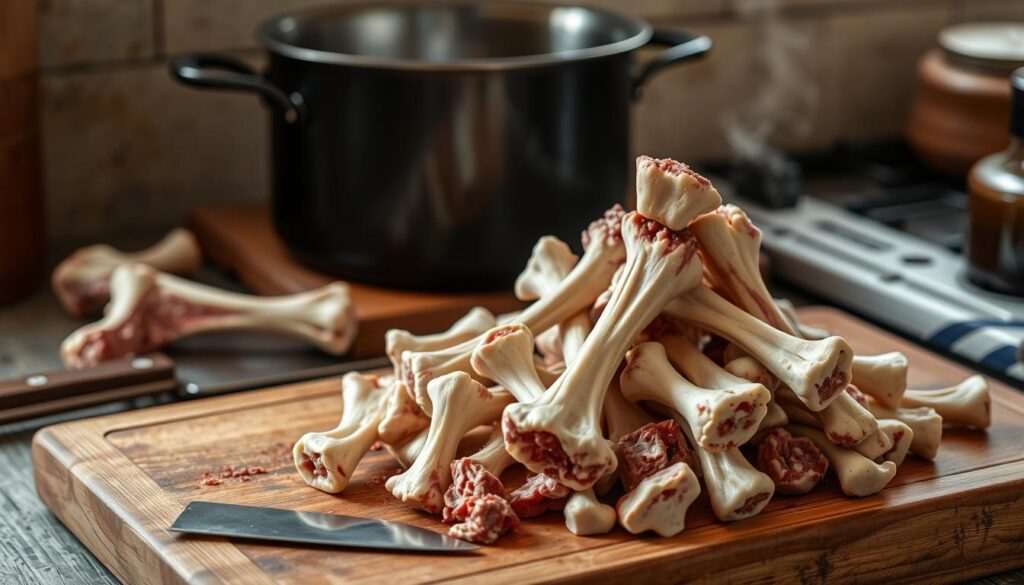
To make an amazing beef stock, start with top-notch beef stock bones. These bones are full of collagen, minerals, and flavor. Your goal is to get every bit of nutrition by cooking slowly and carefully.
- Select fresh, high-quality beef soup bones from a trusted butcher
- Roast bones at 425°F for 45 minutes to develop rich flavor
- Use a large stockpot with cold water to cover bones completely
- Add aromatic vegetables like carrots, onions, and celery
- Simmer gently for 8-12 hours, skimming foam periodically
“A great stock is the foundation of exceptional cooking” – Professional Chef Wisdom
The secret to a great beef stock is patience. Low and slow is your motto for getting the most flavor from the bones. Strain the stock well, and you’ll get a gelatinous, nutritious liquid that makes soups, sauces, and braised dishes better.
Pro tip: Cool your beef stock completely before storing. This lets the fat rise to the top, creating a seal that keeps the stock fresh longer.
Roasting Marrow Bones: Techniques and Tips
Beef bone marrow is a culinary treasure that makes meals special. Roasting marrow bones needs precision to bring out their rich flavor and creamy texture. Whether you’re cooking at home or are a cooking enthusiast, learning to roast marrow bones can boost your skills.
To roast marrow bones, follow key steps for the best results. Your aim is to create a luxurious, melt-in-your-mouth treat that showcases this prized ingredient.
Preparation Methods
- Select center-cut beef bone marrow from a reliable butcher
- Rinse bones thoroughly under cold water
- Pat dry with paper towels to remove excess moisture
- Let bones reach room temperature before roasting
Serving Suggestions
Roasted marrow bones are versatile in serving. Classic presentations include:
- Spread on toasted sourdough bread
- Garnished with fresh parsley
- Sprinkled with sea salt and cracked black pepper
- Paired with pickled vegetables
Flavor Enhancement Tips
To make your marrow bones even better, try these chef tips:
- Roast at high temperatures (around 450°F)
- Use fresh herbs like thyme or rosemary
- Add a splash of white wine before roasting
- Experiment with different seasoning blends
“Roasted marrow bones are not just a dish, they’re an experience that connects us to centuries of culinary tradition.” – Chef Michael Ruhlman
With these tips, you’ll turn simple beef bone marrow into a gourmet delight. It will impress even the most picky food lovers.
Slow-Cooking and Braising with Beef Shank Bones
Slow-cooking turns tough beef shanks into tender, flavorful dishes. Braising breaks down tough tissues, making the meat soft and easy to chew.
To make beef osso buco, follow these steps:
- Select high-quality beef shanks with rich marbling
- Season generously with salt and pepper
- Brown the meat in a heavy-bottomed pot to develop deep flavor
- Add aromatic vegetables like onions, carrots, and celery
- Pour in liquid (wine, stock, or tomato sauce)
Patience is key for perfect braising. Cooking slowly breaks down tissues, creating a rich sauce that enhances the meat.
| Cooking Method | Temperature | Cooking Time |
|---|---|---|
| Oven Braising | 325°F | 2-3 hours |
| Slow Cooker | Low Setting | 6-8 hours |
| Dutch Oven | Low Heat | 3-4 hours |
Pro tip: For a true beef osso buco taste, add gremolata – a mix of lemon zest, garlic, and parsley – just before serving. It brightens the dish’s rich flavors.
Traditional Recipes Featuring Beef Shank Bones
Beef shank bones are culinary treasures that turn simple ingredients into extraordinary dishes. They offer home cooks and chefs a world of delicious possibilities across various cuisines.
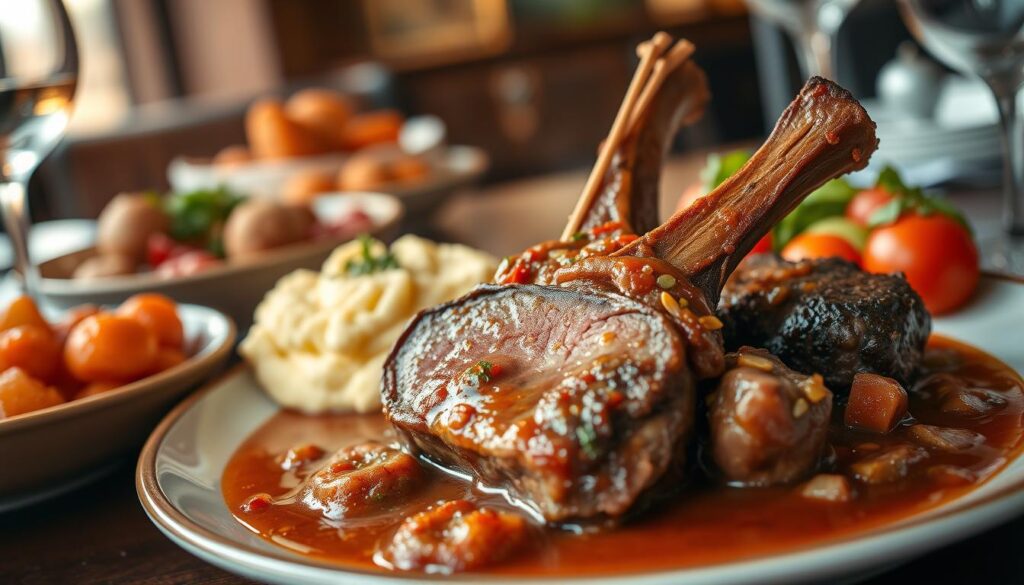
Classic Osso Buco: An Italian Masterpiece
Beef osso buco is a quintessential Italian comfort food. It showcases the incredible potential of beef shank bone. This traditional Milanese dish requires slow cooking to create tender, falling-apart meat that melts in your mouth.
- Braised slowly in white wine and aromatic vegetables
- Typically served with saffron risotto
- Garnished with bright gremolata
Asian-Inspired Culinary Delights
Asian cuisines elevate beef shank bones through unique cooking techniques. Korean and Chinese recipes show remarkable versatility. They transform these cuts into deeply satisfying meals.
- Korean Beef Shank Soup: Rich, hearty broth with tender meat
- Chinese Braised Beef Shank: Slow-cooked with star anise and soy sauce
- Vietnamese Pho with Beef Shank: Aromatic noodle soup
Modern Culinary Interpretations
Contemporary chefs continue to reimagine beef shank bones. They create innovative dishes that respect traditional cooking methods. They also introduce exciting new flavor profiles.
Whether you’re preparing a classic beef osso buco or experimenting with global recipes, beef shank bones offer an affordable and delicious protein option. They promise remarkable culinary experiences.
Maximizing Flavor: Tips from Professional Chefs
Professional chefs know the secret to making meaty beef shanks into culinary masterpieces. They understand the unique flavor potential of beef soup bones. The key is to get every ounce of richness through strategic cooking techniques.
Top chefs recommend these professional flavor-enhancing strategies:
- Brown your beef shank bones thoroughly before slow cooking to develop deep, complex flavors
- Use aromatic vegetables like onions, carrots, and celery as flavor foundations
- Incorporate fresh herbs such as thyme, rosemary, and bay leaves for additional depth
- Deglaze cooking pans with wine or stock to capture every bit of concentrated flavor
“The magic of beef shank bones is in their ability to transform simple dishes into extraordinary culinary experiences.” – Michelin-starred Chef Michael Roberts
When preparing beef soup bones, professional chefs know patience is key. Slow, low-temperature cooking breaks down collagen. This creates rich, gelatinous textures that elevate any dish. Your meaty beef shanks will become tender and infused with incredible depth when you apply these expert techniques.
Consider creating pan sauces by deglazing with homemade stock. This method captures concentrated beef flavors, turning ordinary meals into restaurant-quality presentations. The marrow within beef shank bones provides an unparalleled richness. Professional kitchens use this to create memorable dining experiences.
Common Cooking Mistakes and How to Avoid Them
Cooking beef shank bones can be tricky, even for experienced home chefs. Understanding the potential pitfalls helps you create delicious, tender dishes every time.
When working with grass-fed beef shanks, temperature and timing are crucial. Many home cooks make critical errors that compromise the meat’s quality and flavor.
- Rushing the cooking process with beef shank bone preparations
- Failing to properly tenderize the meat
- Overlooking seasoning techniques
- Incorrect temperature management
The key to perfect beef shanks is patience. Slow-cooking methods break down tough collagen, transforming dense meat into melt-in-your-mouth delicacies.
“Cooking is about passion, and patience is the secret ingredient that elevates every dish.” – Professional Chef
Temperature plays a vital role in preparing grass-fed beef shanks. You should aim to cook until the internal temperature reaches 145 degrees Fahrenheit for optimal tenderness and food safety.
| Cooking Mistake | Solution |
|---|---|
| Overcooking | Use low, consistent heat and monitor internal temperature |
| Undercooking | Ensure meat reaches 145°F for proper doneness |
| Poor Seasoning | Use robust spices and marinades to enhance flavor |
Remember, mastering beef shank bone cooking takes practice. Don’t get discouraged if your first attempts aren’t perfect. Each attempt brings you closer to culinary excellence.
Conclusion
Beef shank bones are a treasure in the kitchen. They turn simple cooking into a special experience. These bones add rich flavors and health benefits for those who try traditional cooking methods.
Exploring bone broth ingredients and cooking methods shows how these bones can improve your dishes. They make your meals more flavorful and nutritious. Both professional chefs and home cooks see the value in using beef shank bones.
Your journey with beef shank bones is just starting. Try new techniques and recipes to see how they can make your meals unforgettable. Whether it’s a hearty stew or a nourishing broth, the possibilities are endless.
Learning to cook with beef shank bones takes time and effort. But with each try, you’ll get better and more confident. Dive into this culinary adventure and soon, your dishes will wow everyone with their taste.