
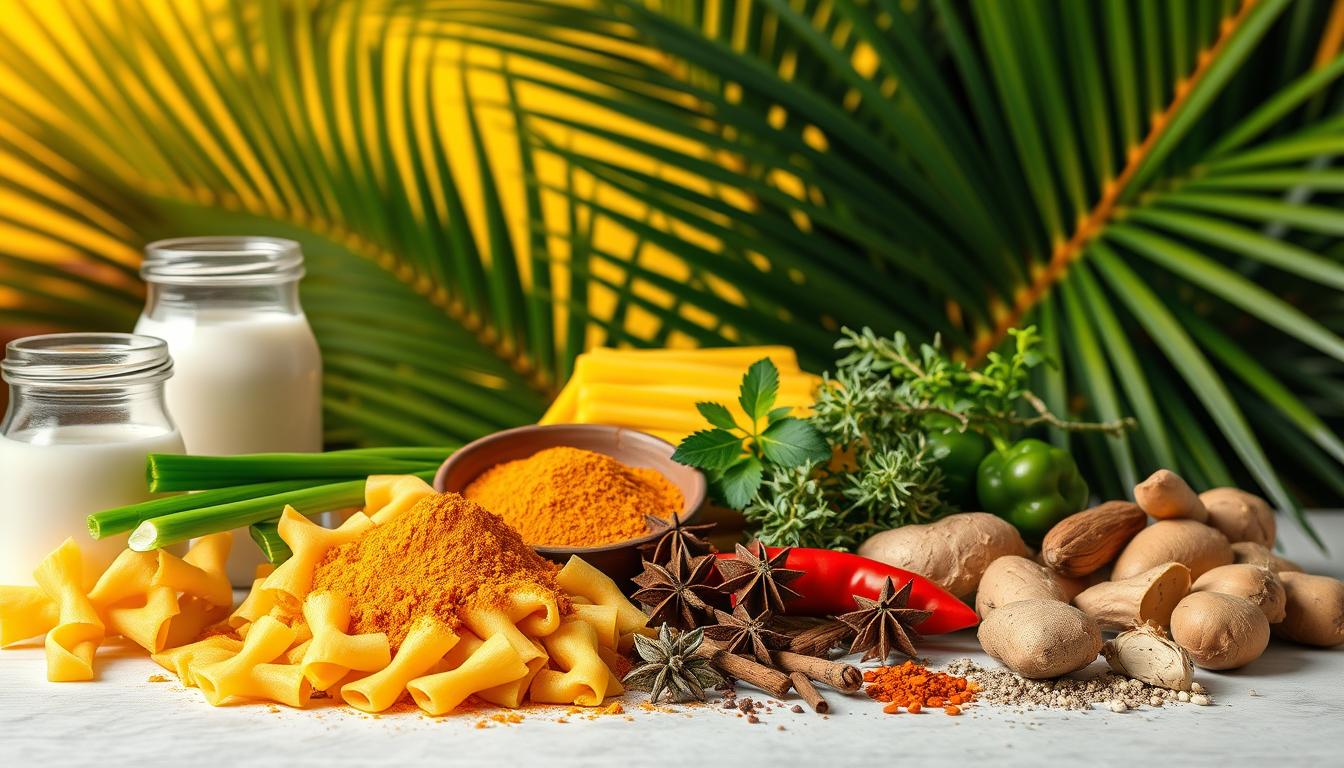
Rasta pasta ingredients are what give this Caribbean-Italian fusion dish its bold flavor. Rasta pasta is a mix of Caribbean and Italian cooking, created by Lorraine Washington. This dish turns simple pasta into a flavorful meal with rich island tastes.
Starting with rasta pasta opens a world of bold spices and colorful veggies. It’s perfect for both home cooks and food lovers. This guide will teach you to make a real rasta pasta, full of Caribbean flavors.
Rasta pasta is very flexible. It’s often vegetarian, but you can try different ingredients. You’ll learn how to pick the right pasta and spices. This way, you can make a dish that celebrates different cultures.
Table of Contents
What is Rasta Pasta and Why is it So Popular
Rasta pasta is a mix of Jamaican and Italian flavors that excites food lovers everywhere. It was created by Lorraine Washington, a Jamaican chef. She mixed traditional cooking with new ideas.
The dish is named for the colorful bell peppers, which remind us of Rastafarian colors. It combines Italian pasta with Caribbean spices for a unique taste.
The Origins of Rasta Pasta
Lorraine Washington made Rasta pasta at her restaurant, Paradise Yard. It quickly became famous. This dish is more than food; it’s a celebration of different cultures.
- Developed by a Jamaican-born chef
- Inspired by Rastafarian color symbolism
- Combines Italian and Caribbean cooking styles
How Caribbean and Italian Cuisines Blend Together
Rasta pasta is special because it brings together two worlds. It has creamy Italian sauce and spicy Jamaican jerk. This mix is both new and comforting.
| Italian Contribution | Caribbean Contribution |
|---|---|
| Creamy pasta base | Jerk seasoning |
| Cheese techniques | Vibrant bell peppers |
| Pasta cooking method | Bold spice profiles |
Rasta pasta is loved because it’s easy to make. You can cook it in under 40 minutes. It’s great for anyone wanting to try new flavors at home.
Essential Rasta Pasta Ingredients You Need to Get Started
Starting an authentic rasta pasta dish means getting the right ingredients. Your journey begins with a list of key items. These items bring Caribbean flavors to your kitchen.
The main ingredients for your rasta pasta make a vibrant, tasty meal. They mix Caribbean and Italian tastes. Here’s what you’ll need:
- Pasta Base: Penne or fettuccine work best
- Colorful bell peppers (red, yellow, green)
- Jerk seasoning (store-bought or homemade)
- Creamy elements: Heavy cream or coconut milk
- Parmesan cheese (or vegan alternative)
Aromatics are key for flavor. Make sure you have:
- Fresh garlic
- Onions
- Fresh thyme
- Olive oil
For those who like spice, add a scotch bonnet pepper to your jerk seasoning. It adds authentic Caribbean heat. You can also add chicken, shrimp, or plant-based options for protein.
Rasta pasta is flexible and easy to make. Most ingredients are found at your local store. Your jerk seasoning turns a simple pasta into a Caribbean feast.
Choosing the Right Pasta for Your Rasta Pasta Recipe
Finding the right pasta is key to a tasty Rasta pasta dish. Penne pasta is a top pick for both home cooks and chefs.
Why Penne Works Best
Penne pasta is a great choice for Rasta pasta for many reasons:
- Tubular shape with hollow centers that capture sauce magnificently
- Ridged surface (penne rigate) helps sauce cling to the pasta
- Convenient bite-sized pieces perfect for easy eating
- Provides maximum flavor absorption
Penne pasta’s design lets it soak up sauce from the inside. This means every single bite is full of Caribbean flavors.
Exploring Alternative Pasta Options
While penne is the top choice, you can also try these alternatives:
- Rotini: Spiral shapes that trap sauce exceptionally well
- Rigatoni: Larger tubes with similar sauce-holding capabilities
- Gluten-free pasta: Perfect for those with dietary restrictions
Pro tip: Cook your pasta to al dente for the best taste. Some chefs suggest cooking it halfway and then finishing it in the sauce for more flavor.
The Role of Jerk Seasoning in Authentic Rasta Pasta
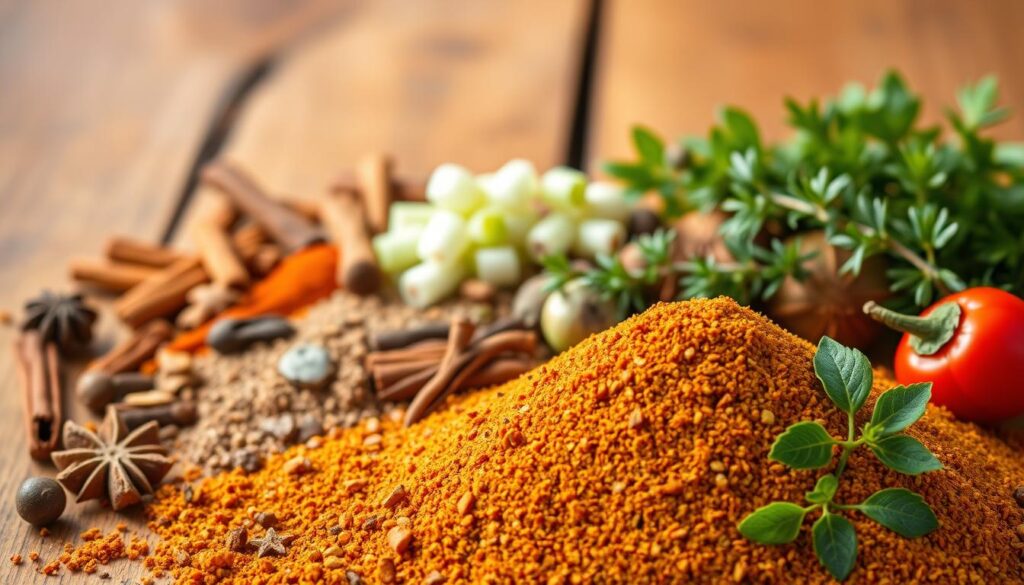
Jerk seasoning turns regular pasta into a Caribbean feast. This mix of spices is what makes Rasta Pasta special. It adds a unique flavor that brings the Caribbean to your plate.
Jerk seasoning is a mix of many ingredients. It usually includes:
- Dried thyme
- Garlic powder
- Onion powder
- Ground allspice
- Scotch bonnet pepper
- Brown sugar
- Ground cinnamon
You can buy jerk seasoning or make your own. Store-bought options are easy, but homemade lets you control the heat and taste. Pro tip: Start with 1.5 tablespoons and adjust according to your spice tolerance.
| Seasoning Type | Flavor Intensity | Preparation Time |
|---|---|---|
| Store-bought | Consistent | Instant |
| Homemade | Customizable | 15-20 minutes |
Jerk seasoning makes proteins and sauces taste smoky, spicy, and sweet. It’s perfect for anyone who loves spice. This blend will make your Rasta Pasta unforgettable.
Bell Peppers and Colorful Vegetables That Define the Dish
Rasta pasta is more than a meal; it’s a feast for the eyes and taste buds. It celebrates color and flavor with bell peppers and other colorful vegetables. These ingredients turn simple pasta into a stunning Caribbean dish.
The beauty of rasta pasta comes from its vegetable mix. Bell peppers are not just for looks; they’re key to a tasty and authentic dish.
Selecting the Perfect Bell Pepper Combination
Choosing the right bell peppers is crucial. The classic mix of red, yellow, and green peppers is more than tasty. They also represent the Pan-African flag and Rastafarian culture. Each color adds its own special touch:
- Red bell peppers: Sweetest and most mature
- Yellow bell peppers: Mild and slightly tangy
- Green bell peppers: Most vegetal and slightly bitter
Additional Vegetables to Enhance Your Dish
Bell peppers are the main attraction, but other colorful veggies can make your rasta pasta even better. Try these exciting additions:
| Vegetable | Flavor Profile | Cooking Tip |
|---|---|---|
| Okra | Authentic Caribbean texture | Slice thinly, add late in cooking |
| Zucchini | Mild and tender | Cut into thin half-moons |
| Spinach | Earthy and nutritious | Wilt just before serving |
| Mushrooms | Rich umami flavor | Sauté until golden |
Trying different colorful vegetables lets you make your rasta pasta your own. But remember, the secret is balance. Let each veggie stand out without overpowering the dish.
Creating the Perfect Creamy Pasta Sauce
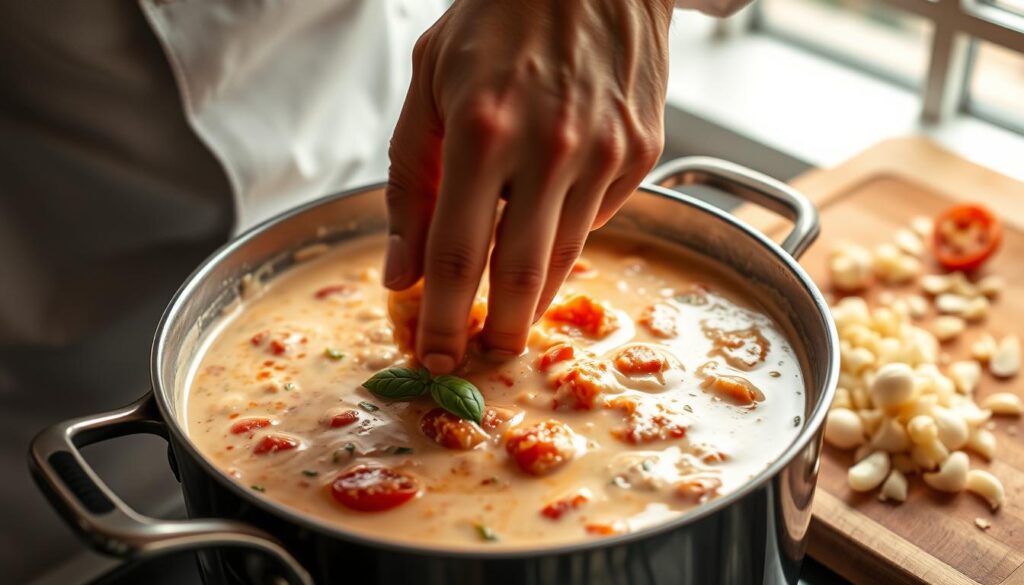
Mastering a creamy pasta sauce is key to a memorable Rasta pasta dish. Your sauce will be the main attraction, adding rich flavor and smooth texture to each bite.
There are two main ways to make your creamy pasta sauce:
- Roux-based method
- Simple reduction technique
The roux method has a few important steps:
- Melt butter in a pan over medium heat
- Add minced garlic for depth of flavor
- Stir in flour to create a smooth paste
- Gradually whisk in whole milk
For a simpler method, mix heavy cream with vegetable or chicken broth. Simmer the mixture until it’s velvety and coats the back of a spoon.
Here are some tips for your creamy pasta sauce:
- Use whole milk for maximum richness
- Whisk continuously to prevent lumps
- Season generously with salt and pepper
- Add Parmesan cheese at the end for extra thickness
If your sauce is too thick, thin it with pasta water. If it’s too thin, simmer it longer or add more cheese. Aim for a sauce that’s creamy, flavorful, and coats your pasta well.
Understanding Heavy Cream and Coconut Milk Options
Choosing the right creamy base is key for your Rasta pasta. The sauce’s texture and taste depend on it.
There are many creamy sauce options for your Rasta pasta. Each ingredient adds its own special touch to your dish.
When to Use Heavy Cream
Heavy cream is a top pick for a rich Rasta pasta sauce. It has a high fat content of 36-40%. This makes it:
- Luxurious and silky
- Stable in sauce emulsion
- Restaurant-quality
- Perfect for special occasions
Professional chefs say heavy cream is great for a thick, indulgent sauce. It coats pasta well and thickens beautifully when simmered.
Benefits of Using Coconut Milk
Coconut milk is a top choice for dairy-free options. Full-fat coconut milk offers:
- Exceptional creaminess
- Natural tropical flavors
- Great for vegan and dairy-free recipes
- Easier sauce-making
Always pick full-fat coconut milk for the best results. Unsweetened varieties are best to keep your Rasta pasta savory.
Trying out heavy cream and coconut milk lets you tailor your Rasta pasta. It’s a chance to explore different tastes and dietary needs. Your creativity in the kitchen has no limits!
The Importance of Parmesan Cheese in Rasta Pasta
Parmesan cheese turns your Rasta pasta into a true masterpiece. It adds more than flavor; it makes the dish creamy and unforgettable.
Adding parmesan cheese to your Rasta pasta brings a powerful flavor. It perfectly matches the spicy jerk seasoning. The cheese offers several benefits:
- Adds deep, savory umami flavor
- Creates a smooth, creamy sauce texture
- Helps thicken the sauce naturally
- Provides a salty, rich undertone
Choosing the right parmesan cheese is key. Freshly grated parmesan from a block tastes best and melts smoothly. If you’re in a hurry, pre-grated parmesan works well too.
Pro tip: Add parmesan cheese after removing the pan from heat. This keeps the cheese from becoming grainy. Use ½ to 1 cup of parmesan, depending on your sauce preference.
If you’re on a dairy-free diet, don’t worry. You can use vegan parmesan made from nuts or coconut oil. Or, skip cheese and add a tablespoon of nutritional yeast for a rich flavor.
Caribbean Spices That Add Heat and Flavor
Rasta pasta gets its unique taste from Caribbean spices. These spices turn a simple pasta dish into a flavorful journey. They make you feel like you’re in the Caribbean.
To make the best Rasta pasta, you need to know about Caribbean spices. They add more than just heat. They create a rich, layered taste that makes every bite special.
Working with Scotch Bonnet Peppers Safely
Scotch bonnet peppers are key to Caribbean heat. Here are important safety tips for using them:
- Always wear protective gloves when handling peppers
- Avoid touching your face or eyes during preparation
- Wash hands thoroughly with dish soap after handling
- Remove seeds for milder heat, keep seeds for maximum spiciness
Adjusting Spice Levels for Your Taste
It’s easy to control the heat in your Rasta pasta. Here’s how:
- Reduce jerk seasoning by half for a milder version
- Leave scotch bonnet pepper whole for less intense heat
- Add a teaspoon of sugar to balance spiciness
- Stir in extra coconut milk to dilute heat
“Caribbean spices are not just about heat—they’re about telling a story through flavor.”
Pro tip: If your dish is too spicy, add cool, creamy avocado or sour cream. It will help balance the heat.
Protein Options to Complete Your Rasta Pasta
Rasta pasta ingredients can turn this tasty dish into a protein-packed feast. While traditional Rastafarian food was vegetarian, today’s rasta pasta has many protein choices. These options meet different tastes and dietary needs.
Chicken is the top protein pick for rasta pasta. You can use chicken breast or thighs for the best flavor. Cut the meat into small cubes, marinate with jerk seasoning, and cook until it’s 165°F inside.
- Chicken breast (leaner option)
- Chicken thighs (more flavorful)
- Shrimp (quick-cooking seafood option)
- Salmon (rich omega-3 alternative)
Seafood fans can try succulent shrimp or jerk-seasoned salmon fillets. For plant-based rasta pasta, consider these protein-rich choices:
- Chickpeas
- Vegan chicken strips
- Extra mixed vegetables
Your protein choice should match the Caribbean flavors of rasta pasta. Aim for 1.5 pounds of protein for 4-6 people. This way, every bite is full of authentic taste and nutrition.
Conclusion
Your journey to making tasty rasta pasta starts with confidence. This dish mixes Caribbean and Italian flavors in a simple way. It turns weeknight meals into something special.
With just 30-40 minutes of prep, you’ll make a dish that looks like it’s from a pro kitchen. The best part? You can change the ingredients to fit your taste. Want more spice? Add more jerk seasoning. Want a different protein? Try something new.
This dish is great for home cooks because it’s easy to prep ahead. Store it in an airtight container for up to 5 days in the fridge. Or freeze it for two months. When you reheat it, a bit of milk or cream makes it creamy again.
Now you can impress your family and friends with your rasta pasta skills. Add colorful bell peppers and play with spices. Enjoy a meal that’s easy to make and full of flavor. Welcome to a world of international flavors at your dinner table.