

Beef jerky has become a favorite snack for many. It’s great for athletes, outdoor lovers, or anyone looking for a quick, healthy snack. Knowing how to pick the best beef jerky sticks can really improve your diet.
Not every beef jerky is the same. The good stuff depends on what’s in it, how it’s made, and the quality of the meat. Choosing wisely is important. It affects how much protein and sodium you get, which are key for health.
Today, you can find all sorts of beef jerky. From common gas station snacks to high-end grass-fed options, there’s something for everyone. The trick is to know what makes a jerky stick healthy.
Table of Contents
What Are Beef Jerky Sticks and Why Are They Popular
Beef jerky has changed from a simple survival food to a modern nutritional powerhouse. Its journey shows how our views on portable protein have evolved.
Dried meat has been key for survival throughout history. Different cultures used unique ways to preserve meat during hard times.
The History and Evolution of Beef Jerky
Ancient civilizations knew the importance of preserving meat by drying. The making of artisanal beef jerky has roots in many global traditions:
- Native American tribes dried buffalo meat for long-term storage
- South African cultures developed biltong, a similar dried meat product
- Andean cultures used freeze-drying techniques in high-altitude regions
From Gas Station Snack to Health Food Staple
Beef jerky has changed a lot in recent years. What was once seen as a low-quality snack is now a top choice for health lovers.
Today, artisanal beef jerky brands aim for:
- High-quality, grass-fed beef sources
- Minimal processing
- Natural ingredient lists
- Specialized dietary needs (keto, paleo)
The jerky market now offers complex flavors and nutrition. Athletes, fitness fans, and health enthusiasts see it as a top protein snack.
Understanding Beef Jerky Nutrition and Health Benefits
Beef jerky has become more than just a snack. It’s now a nutrition powerhouse. It’s packed with protein, making it great for health and fitness.
Let’s look at what’s in a typical serving of beef jerky:
- Protein Punch: About 11 grams per ounce, helping keep muscles strong
- Low Calorie: Only 80 calories per serving
- Minimal Carbs: Great for those who follow a low carb diet
- Essential Minerals: Full of iron, zinc, and B vitamins
The protein in beef jerky takes longer to digest. This keeps you full longer. It’s perfect for managing weight and controlling hunger.
The jerky also has important nutrients. Iron helps carry oxygen, zinc boosts the immune system, and B vitamins help with energy.
“Dried jerky retains nutrients comparable to fresh meat, making it a convenient nutritional powerhouse,” says nutrition expert Frances Largeman-Roth.
Choose jerky that’s made with minimal processing and no extra additives. This way, you get the most nutritional benefits.
How to Read Beef Jerky Labels Like a Pro
Reading organic beef jerky labels can seem like solving a puzzle. It’s important to know what’s in your snack. This helps you make healthy choices and get the right nutrition.
To read labels well, you need to know a few key things. You want to be able to tell what’s in your snack. This makes you a smart shopper.
Decoding the Ingredient List
When looking at organic beef jerky ingredients, pay attention to these points:
- Protein source should be the first ingredient
- Look for minimal, recognizable ingredients
- Avoid artificial preservatives
- Check for natural seasonings
Good organic beef jerky has a simple ingredient list. The first item should be a quality protein like grass-fed beef. Then, it should have simple seasonings you know.
Understanding Serving Sizes and Nutritional Information
Serving sizes can be misleading. Manufacturers might use small sizes to make the nutrition look better. Always check the whole package.
| Nutritional Aspect | Ideal Range | What to Look For |
|---|---|---|
| Protein | 9-12g per serving | High protein content |
| Sodium | Under 400mg | Lower sodium levels |
| Sugar | 3g or less | Minimal added sugars |
| Fat | 1-3g | Lean protein source |
By learning these label-reading tips, you’ll know how to pick the healthiest organic beef jerky. You’ll make choices with confidence.
Key Ingredients to Look for in Healthy Beef Jerky Sticks
Choosing the right ingredients in beef jerky can change how you snack. Not all jerky is the same. Knowing what to look for helps you pick healthier options that taste great and are good for you.
Grass-Fed Beef: The Gold Standard of Protein
Grass-fed beef jerky is a top-notch protein choice. It’s not just tasty; it’s also full of good stuff for your body.
- Higher omega-3 fatty acid content
- More antioxidants like vitamin E
- Cleaner protein source with minimal processing
- Rich, natural beef flavor
Natural Seasonings That Elevate Flavor
The best grass-fed beef jerky has simple, known ingredients. These ingredients make the meat taste better without adding fake stuff.
| Natural Seasoning | Benefit |
|---|---|
| Black Pepper | Adds spicy complexity |
| Celery Powder | Natural preservative |
| Garlic | Boosts immune support |
| Coriander | Provides subtle citrus notes |
When picking beef jerky, remember: fewer ingredients mean better quality. Go for natural seasonings and simple, high-quality meat sticks for the best taste and health benefits.
Red Flags: Ingredients to Avoid in Beef Jerky
Not all beef jerky is the same. Some products have hidden ingredients that can make a healthy snack unhealthy. It’s important to read labels well to make better choices.
When looking at beef jerky packaging, watch out for these bad ingredients:
- Mechanically separated meat
- High fructose corn syrup
- Artificial preservatives
- Excessive sodium
- Monosodium glutamate (MSG)
Artificial preservatives like sodium nitrate and sodium benzoate can be harmful. They make the jerky last longer but might not be good for you. Natural preservation methods using celery powder are safer alternatives.
| Ingredient | Health Concern | Better Alternative |
|---|---|---|
| Mechanically Separated Meat | Low nutritional value | Whole muscle meat |
| High Fructose Corn Syrup | Added sugar | Natural sweeteners |
| Sodium Nitrate | Potential cancer risk | Natural nitrates |
Sugar content is key. Look for jerky with less than 6 grams of sugar per serving. Too much sugar makes your snack more like candy, losing its health benefits.
Being a smart label reader is your best defense. Pick jerky with simple, natural ingredients that focus on quality meat and seasonings.
Best Beef Jerky Sticks: Top Brands and What Makes Them Stand Out
Looking for the perfect gourmet beef sticks can be tough. The market has many choices, but not all are the same. Your perfect jerky stick depends on taste, nutrition, and what you like to eat.
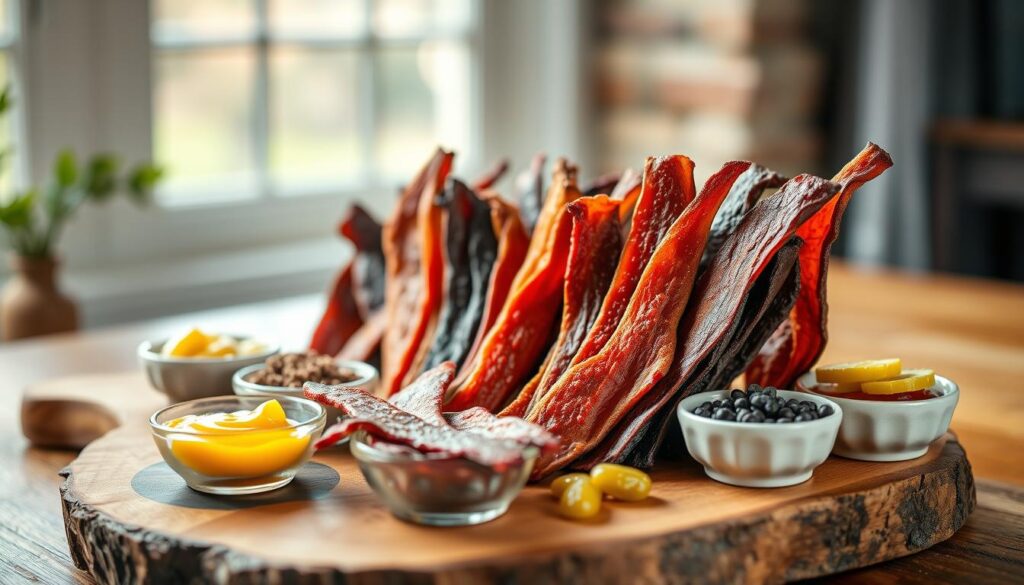
Many top jerky brands stand out for their flavor, quality, and health benefits:
- Chomps: Ranked #1 for grass-fed beef quality and clean ingredients
- Vermont Smoke and Cure: Offers innovative turkey-based options
- Nick’s Sticks: Provides grass-fed beef with smooth texture
- Perky Jerky: Focuses on clean labels and dietary flexibility
Premium Grass-Fed Options
Grass-fed beef jerky sticks are the best for health lovers. Chomps is a leader with no sugar, paleo-friendly ingredients, and great beef taste. Their special seasoning mix includes black pepper, red pepper flakes, and coriander, making jerky a special treat.
Clean Label and Organic Choices
Brands like Perky Jerky are great for those who want to know what’s in their food. They offer gluten-free, keto-friendly options with lots of protein. Vermont Smoke and Cure adds excitement with their pepperoni-spiced turkey stick, showing clean labels can mean great taste.
Your choice of jerky should match your taste, health needs, and what you’re looking for. Whether you need a protein boost after working out or a tasty snack, there’s a jerky stick for everyone.
Sodium Content: Finding the Right Balance
Beef jerky is a great source of protein, but it’s high in sodium. The Dietary Guidelines for Americans suggest keeping sodium intake under 2,300mg a day. A single serving of beef jerky can have up to 500mg of sodium, which is almost 22% of your daily limit.
Knowing how much sodium is in beef jerky helps you snack smarter. Most servings are small, with 2-4 pieces per ounce. This means you could eat 800-1,000mg of sodium without even noticing.
- Standard beef jerky contains approximately 450mg sodium per ounce
- Look for jerky options with 5-10% of daily sodium value per serving
- Individuals with hypertension should be extra cautious
Too much sodium can cause serious health problems. These include:
- Fluid retention
- Increased blood pressure
- Potential complications for heart and kidney health
When picking beef jerky, choose brands with less sodium. Read nutrition labels carefully and think about your daily sodium intake. If you have health concerns, talk to your doctor about adding beef jerky to your diet.
Pro tip: Balance jerky consumption by drinking plenty of water and choosing low-sodium varieties.
Sugar and Carbohydrate Considerations for Low-Carb Diets
Choosing the right low carb meat sticks is key when on a low-carb diet. Not all beef jerky is the same, especially in sugar and carbs.

Standard beef jerky can have a lot of carbs and sugar. Most have about 6 grams of carbs and sugar per ounce. This can mess up your low-carb diet plans.
Keto-Friendly Beef Jerky Selection
When looking for keto-friendly low carb meat sticks, keep these points in mind:
- Zero or minimal sugar content
- Total carbohydrates under 2 grams per serving
- No hidden carb sources like maltodextrin
Reading Sugar Content on Labels
Learning to read labels is crucial for finding low-carb jerky. Look beyond the sugar line and watch for hidden sugars:
| Sugar Alias | What to Watch For |
|---|---|
| Evaporated cane juice | Hidden sugar source |
| Agave nectar | High in concentrated sugars |
| Fruit juice concentrates | Carbohydrate-dense additives |
For strict keto followers, aim for zero grams of sugar. Those on a moderate low-carb diet can have up to 3 grams per serving. Always check both total carbs and sugar to make a good choice.
Beef Jerky Sticks for Weight Loss and Fitness Goals
High protein jerky snacks are great for weight loss and fitness. They are packed with nutrients and help manage weight. They also support muscle health.
When picking high protein jerky snacks for weight management, look for these benefits:
- Low calorie content (about 80 calories per ounce)
- High protein helps with muscle recovery
- They can help you feel full longer
- They are easy to carry and eat on the go
Registered dietitians say beef jerky is good for your diet. The protein-to-calorie ratio is key. Protein makes you feel full, which can help you eat less.
| Jerky Type | Calories per Serving | Protein (g) |
|---|---|---|
| Grass-Fed Beef Jerky | 80 | 11 |
| Turkey Jerky | 70 | 9 |
| Chicken Jerky | 60 | 8 |
To get the most out of jerky, eat it with foods high in fiber like veggies or fruits. This mix makes for a satisfying and healthy snack that helps with weight loss.
“Protein snacks help you feel fuller longer and can be a smart strategy for weight management,” says nutrition expert Dr. Sarah Thompson.
Remember, jerky is just one part of a balanced diet. It’s not a magic fix but a useful tool. Eating well and in moderation is still the best way to lose weight and stay fit.
Making Your Own Beef Jerky Sticks at Home
Creating your own grass-fed beef jerky at home is a fun culinary adventure. It lets you control the ingredients and flavors. This way, you can make sure it’s high-quality and free from preservatives found in store-bought jerky.
To make tasty beef jerky, you need to pay attention to detail and learn a few key techniques. Let’s see how you can turn premium grass-fed beef into tasty jerky sticks in your kitchen.
Selecting the Perfect Cut of Meat
Choosing the right meat is key for great grass-fed beef jerky. Look for lean cuts with little fat:
- Eye of round
- Bottom round
- Sirloin tip
- Flank steak
When picking your meat, go for even thickness and a deep red color. Grass-fed beef is better in nutrition and taste than grain-fed beef.
Dehydrating and Food Safety Essentials
Proper dehydration and food safety are crucial when making beef jerky at home. Follow these important steps:
- Heat meat to 160°F before dehydrating to kill off pathogens
- Use a food dehydrator or oven set between 145-165°F
- Dry jerky for 4-8 hours until it bends without breaking
- Store in airtight containers in a cool, dark place
By learning these techniques, you’ll make delicious, healthy grass-fed beef jerky. It will taste better and be more nutritious than store-bought options.
Conclusion
Choosing the best beef jerky sticks is all about finding a balance. You want it to be nutritious, tasty, and fit your health goals. Look for jerky that’s made from high-quality, grass-fed beef. It should also have low sodium and lots of protein.
Brands like Chomps, Nick’s Sticks, Vermont Smoke and Cure, and Perky Jerky are top choices. They offer jerky that’s not only delicious but also meets strict nutritional standards. Always check the ingredients. Avoid jerky with too many additives or sugars that can harm your diet.
Be mindful of how much beef jerky you eat. Experts say it’s best to have it no more than three times a week. Enjoy it with healthy foods like veggies and fruits. This way, you get a balanced snack that’s good for you.
Now you know how to pick the right beef jerky. By reading labels, looking for quality, and eating it in moderation, you can make it a healthy part of your life.