
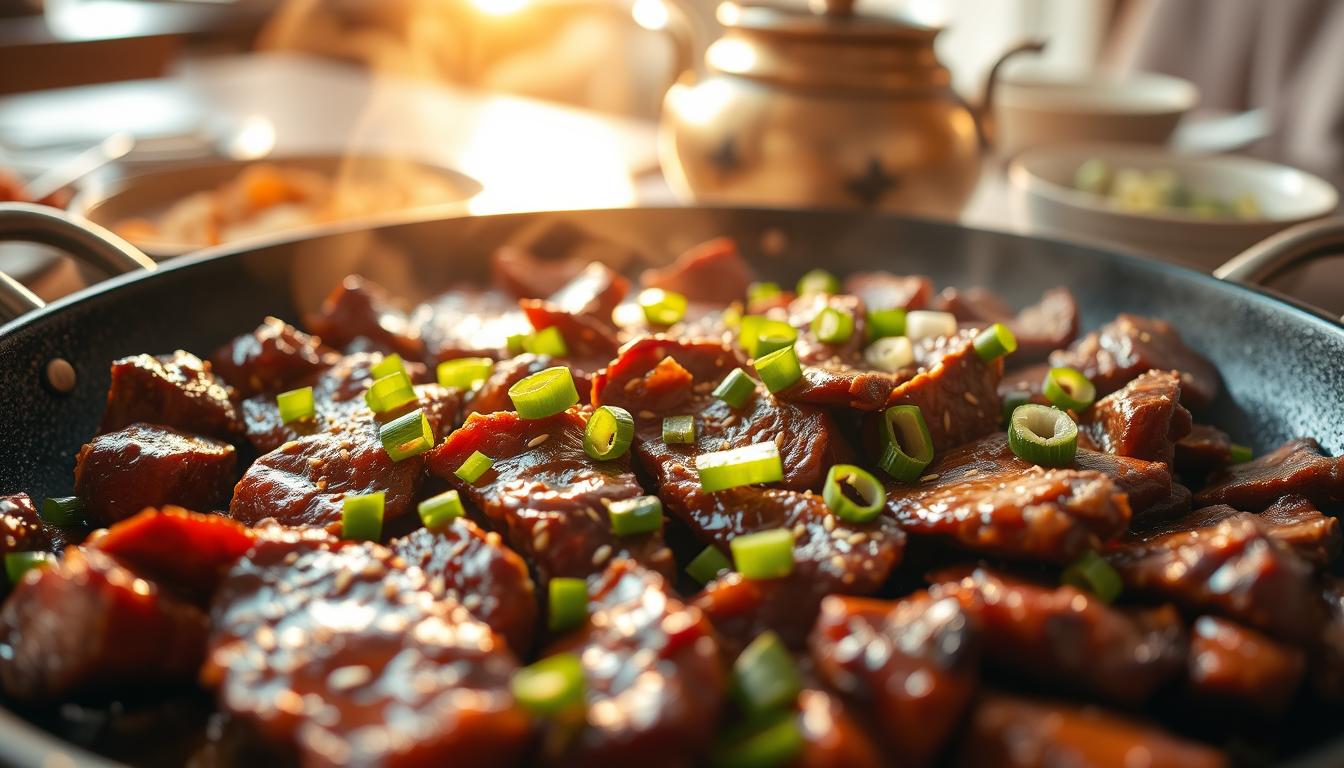
Want a tasty beef bulgogi recipe that brings Korean BBQ to your kitchen? You’re in the right place! Bulgogi, meaning “fire meat,” is a favorite Korean dish. It’s perfect for those who love trying new international foods.
This dish has thinly sliced beef marinated in a sweet, savory sauce. Then, it’s grilled to perfection. Our recipe will help you make a top-notch Korean BBQ at home, whether you’re experienced or just starting out.
Get ready to improve your cooking and wow your loved ones with this traditional Korean dish. It’s easy to make and super tasty.
Table of Contents
Understanding Korean Bulgogi: A Traditional Delicacy
Bulgogi is at the heart of Korean food, loved by many worldwide. It’s a dish that shows the evolution of Korean cuisine and its importance in culture.
Origins of Bulgogi
The history of bulgogi goes back to the Goguryeo era. Back then, people grilled thin meat on skewers. Later, during the Joseon Dynasty, it became the marinated, grilled dish we love today.
The royal court’s influence made bulgogi a sophisticated dish. It went from simple meat to a true culinary art.
- Originated in ancient Korean kingdoms
- Evolved from skewered meat techniques
- Refined through royal court cooking methods
What Makes Bulgogi Special
Bulgogi’s marination is what makes it special. The meat is sliced very thin and marinated in a mix of:
- Soy sauce
- Sesame oil
- Garlic
- Brown sugar
- Pear juice (for tenderizing)
Cultural Significance in Korean Cuisine
Bulgogi is more than food; it’s a social event. In Korean restaurants, people gather around grills to cook and share meat. This makes eating a fun, communal experience.
Bulgogi represents the essence of Korean culinary tradition: bringing people together through delicious, carefully prepared food.
Essential Ingredients for Perfect Beef Bulgogi
To make authentic beef bulgogi, you need the right ingredients. The main ingredient is usually ribeye for bulgogi. It’s known for its great marbling and tender texture. You can also use sirloin or beef tenderloin as alternatives.
Your Korean marinade is what makes the meat delicious. The main ingredients are:
- Soy sauce: It adds depth of flavor
- Sesame oil: Gives a nutty taste
- Asian pear: Makes the meat tender and sweetens it
- Garlic: Adds a strong aroma
- Sugar or honey: Balances the flavors
Choosing fresh beef is crucial. Opt for high-quality beef with lots of marbling. If you can’t find ribeye, pick cuts with similar fat content for tenderness.
Pro tip: Slice the meat thinly against the grain for the most tender bulgogi experience.
Even without Asian markets nearby, you can still make this dish. Most ingredients are available in well-stocked grocery stores. So, don’t let lack of ingredients stop you from enjoying this Korean classic at home.
The Secret Behind the Perfect Bulgogi Marinade
Making a great bulgogi marinade is like an art. It turns simple beef into a delicious Korean dish. The secret is in balancing flavors and using Korean tenderizing methods.
Creating the perfect marinade is more than just mixing stuff. It’s about knowing how each part adds to the meat’s taste and feel.
Key Marinade Components
Your marinade should have a mix of ingredients that really flavor the meat:
- Soy sauce: Adds depth and saltiness
- Sesame oil: Gives a nutty smell
- Brown sugar: Makes it sweet and caramelized
- Garlic: Brings strong flavor
- Grated Asian pear: Tenders the meat naturally
Traditional Tenderizing Methods
Korean tenderizing is special. It uses Asian pear to make the meat tender and juicy. The pear’s enzymes break down meat fibers.
Marination Timing Tips
Getting marination right is key for bulgogi. Marinate your beef for:
- Minimum: 30 minutes
- Optimal: 2-4 hours
- Maximum: 8 hours
Don’t marinate for more than 8 hours. It can make the meat mushy. You want to flavor it without losing its texture.
Best Cuts of Beef for Authentic Bulgogi
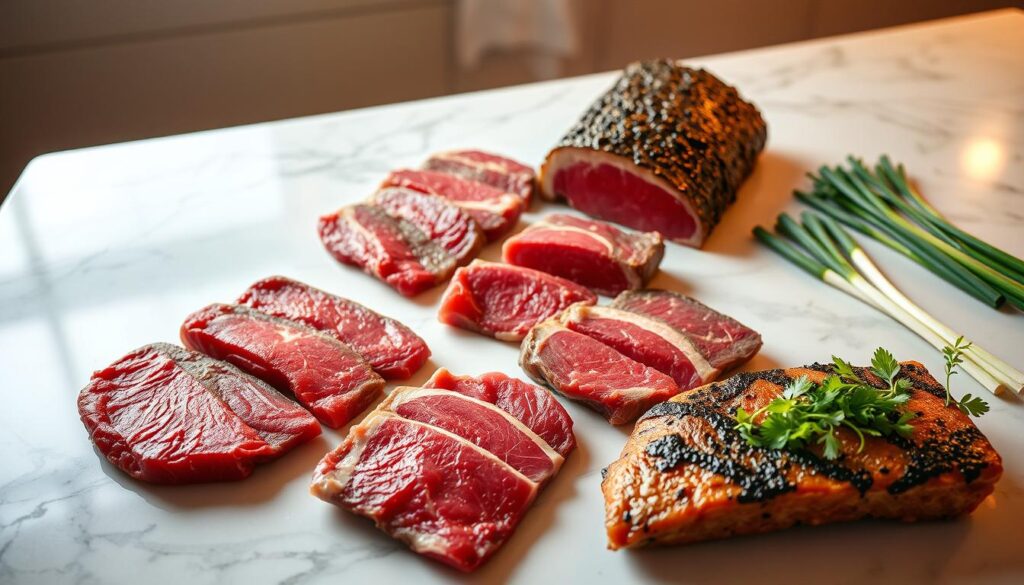
Choosing the right cut of beef is key for delicious bulgogi. The best beef for bulgogi needs careful picking for tender, tasty results. Your meat choice can greatly affect this classic Korean BBQ dish.
When preparing bulgogi meat, consider these top beef cuts:
- Ribeye: The premium choice for bulgogi, offering exceptional marbling and rich flavor
- Sirloin: A lean yet tender option with excellent taste
- Tenderloin: Incredibly soft and perfect for delicate slicing
Slicing beef for Korean BBQ needs precision. The ideal thickness is between 1/8 to 1/4 inch. Pro tip: partially freeze your meat for 30 minutes to make slicing easier and achieve those signature thin strips.
Professional Korean chefs recommend selecting meat with fine, consistent marbling for the most authentic bulgogi experience.
If you’re short on time, many Asian grocery stores offer pre-sliced beef specifically for bulgogi. This convenient option saves preparation time while ensuring perfect cuts.
Your meat selection greatly impacts the final taste and texture of your bulgogi. Invest time in choosing quality beef, and you’ll elevate your Korean BBQ from good to extraordinary.
Beef Bulgogi Recipe: Step-by-Step Preparation
Learning to make bulgogi at home is simpler than you might think. This classic Korean dish brings top-notch flavors to your kitchen. It only needs a few simple steps and careful prep.
To cook bulgogi at home, you need to focus on the details. We’ll guide you through each step. This will help you make a real Korean BBQ at home.
Meat Preparation Techniques
Getting the beef right is key for perfect bulgogi. Here’s what to do:
- Choose a tender cut like sirloin or rib-eye
- Cut the meat against the grain into thin slices
- Make sure the slices are about 1/8 inch thick
- Use a sharp knife for clean cuts
Marination Process
The marinade is where bulgogi gets its amazing flavor. Here’s how to make it:
- Mix soy sauce, sugar, garlic, and sesame oil
- Whisk until the sugar is fully dissolved
- Coat the meat evenly with the marinade
- Refrigerate for at least 30 minutes, or 2-4 hours for better flavor
Cooking Methods
There are many ways to cook bulgogi:
- Stovetop Skillet: Heat a cast-iron pan to medium-high
- Cook the meat in batches for even browning
- Grill option: Use high heat for quick caramelization
- Cook for 2-3 minutes per side until crispy
By following these steps, you’ll make bulgogi that’s just as good as in a Korean restaurant. Remember, patience, proper prep, and attention to cooking temperatures are the secrets.
Traditional Cooking Techniques and Tips
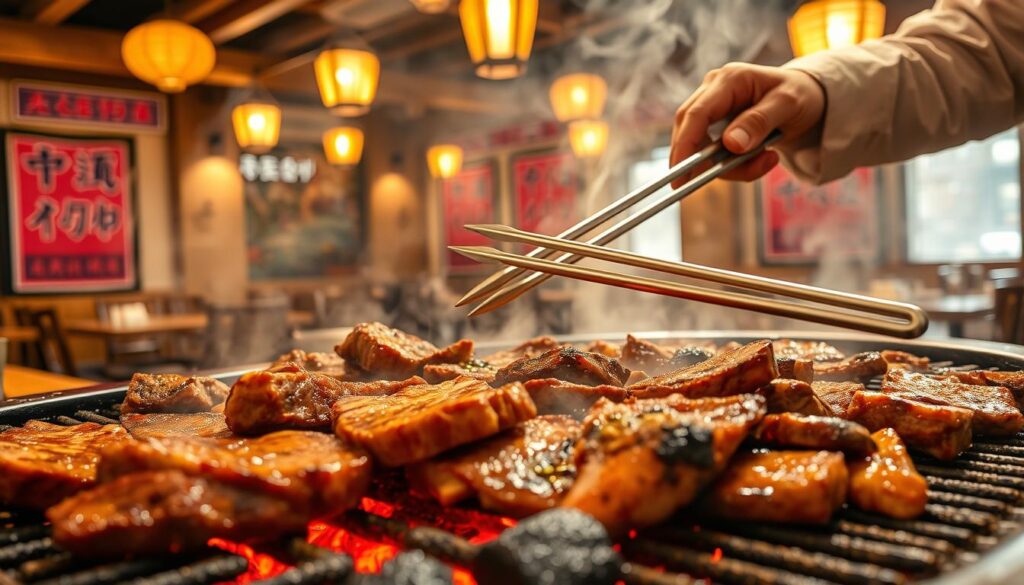
Mastering authentic Korean grilling methods is more than just following a recipe. When making bulgogi, your cooking technique is key. It helps achieve that perfect caramelized flavor found in traditional Korean BBQ.
Begin by setting up your cooking area. Korean BBQ cooking tricks include turning on your exhaust fan before starting. This is because the high-heat cooking will produce a lot of smoke. Good ventilation is essential.
- Use a cast-iron skillet or heavy griddle for best results
- Cook meat in small batches to prevent overcrowding
- Maintain high heat for optimal caramelization
When cooking bulgogi, aim for a beautiful char without overcooking the meat. Quick, high-heat cooking seals in the marinade’s flavors. It also creates those delightful crispy edges.
If you don’t have a traditional Korean tabletop grill, a hot skillet works well. The trick is to cook the thinly sliced beef quickly. This way, it develops a slight char without becoming tough.
“The secret to perfect bulgogi is high heat and quick cooking” – Korean BBQ Masters
Pro tip: Let your meat come to room temperature before cooking. This ensures even cooking. It also helps achieve that authentic Korean BBQ texture you’re aiming for.
Essential Side Dishes and Accompaniments
Enhancing your bulgogi experience is more than just the main dish. Korean side dishes and bulgogi accompaniments are key to a true and tasty Korean BBQ meal. They make every bite a delight for your senses.
The right sides turn a simple meal into a journey of flavors. Each dish adds something special that goes well with the savory bulgogi beef.
Traditional Korean Sides
Classic Korean side dishes that go great with bulgogi include:
- Kimchi – fermented cabbage with a spicy kick
- Steamed white rice
- Pickled radishes
- Lettuce wraps for creating bite-sized parcels
- Seasoned bean sprouts
Serving Suggestions
Make dining interactive by setting up a Korean BBQ-style spread. Place side dishes in small bowls around the bulgogi platter. This lets everyone make their own perfect meal.
“The art of Korean dining is about sharing and experiencing flavors together” – Korean Culinary Tradition
Presentation Tips
For a true presentation, use ceramic side dishes and arrange them neatly. Offer chopsticks and let guests mix and match different Korean side dishes with their bulgogi.
| Side Dish | Flavor Profile | Pairing Recommendation |
|---|---|---|
| Kimchi | Spicy, Tangy | Excellent with rich bulgogi |
| Steamed Rice | Neutral, Soft | Balances meat’s intensity |
| Pickled Radish | Crisp, Refreshing | Cuts through fatty beef |
Storage and Reheating Guidelines
Keeping your homemade bulgogi tasty means storing and reheating it right. You need to keep it fresh and safe to eat.
Here’s how to store leftover bulgogi:
- Refrigerate within 2 hours of cooking
- Store in airtight containers
- Keep refrigerated for up to 4 days
- Freeze for extended storage up to 3 months
Reheating bulgogi needs care to avoid drying it out. Try these methods:
- Skillet Method: Heat a pan with a small amount of oil over medium heat
- Microwave Technique: Use low power and cover to retain moisture
- Oven Warming: Reheat at 350°F with a splash of water or broth
Leftover bulgogi can lead to new, exciting meals. Here are some ideas:
| Leftover Dish | Preparation Suggestion |
|---|---|
| Bulgogi Fried Rice | Chop meat, mix with day-old rice and vegetables |
| Bulgogi Tacos | Wrap in tortillas with fresh salsa and cilantro |
| Bulgogi Grain Bowl | Serve over quinoa with pickled vegetables |
By using these tips, your bulgogi stays tasty and safe. This reduces waste and boosts your cooking fun.
Conclusion
Mastering Korean cuisine is now within your reach with this simple beef bulgogi recipe. The homemade bulgogi benefits extend far beyond just creating a delicious meal. You’ll discover a new confidence in preparing authentic Korean BBQ at home.
This confidence will transform your cooking skills and bring exciting flavors to your dining table. By following the techniques and tips outlined in this guide, you can recreate the rich, savory experience of traditional Korean barbecue right in your own kitchen.
The process is surprisingly straightforward. You can experiment with marinades, meat cuts, and cooking methods that suit your personal taste preferences. Your culinary journey doesn’t end here.
Each time you prepare bulgogi, you’ll become more skilled at balancing flavors and understanding meat preparation. You’ll connect with a vibrant culinary tradition. Invite friends and family to share in this delightful dish.
Watch as your homemade Korean BBQ becomes a beloved meal that sparks conversation and creates lasting memories. Remember, cooking is about exploration and enjoyment. Don’t be afraid to make this recipe your own, adjust seasonings, and celebrate the joy of bringing global cuisine into your home kitchen.
2 thoughts on “Beef Bulgogi Recipe: How to Make Authentic Korean BBQ at Home”