
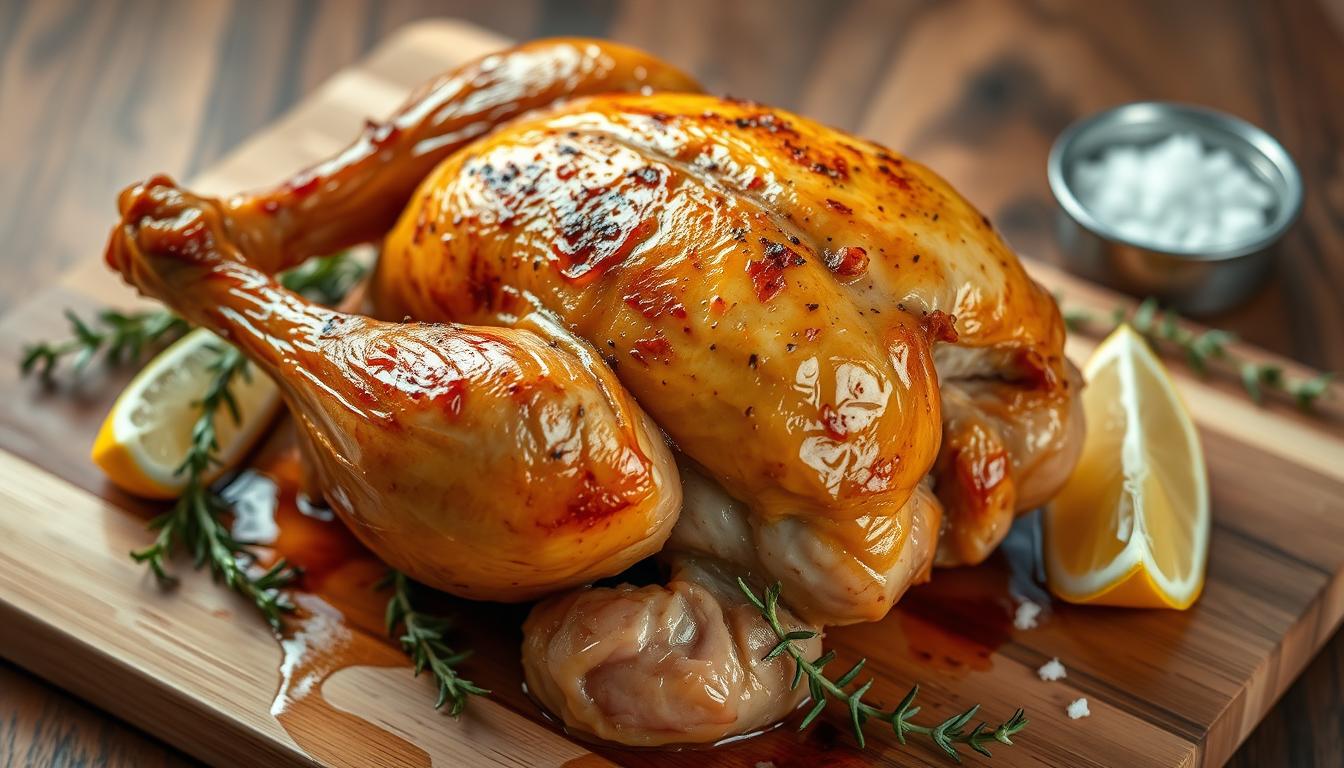
Cooking Cornish hens can seem tough, but with the right methods, you can make a meal like a restaurant at home. These small, tasty birds are great for fancy dinners or special events. They offer a tasty choice instead of regular chicken.
Getting the cooking time and temperature right is key to a juicy, tender Cornish hen. Whether you’re cooking at home or you love to cook, learning how to prepare these birds will make you a better cook.
Table of Contents
What Makes Cornish Hens Different from Regular Chicken
Cornish hens are a unique choice compared to regular chicken. They are small and compact, offering a special taste experience. This makes them different from other chicken types.
Understanding the Size and Weight of Cornish Game Hens
Cornish game hens are much smaller than regular chickens. They usually weigh between 1 to 2 pounds. This size has many benefits for cooking:
- Perfect for individual servings
- Easier to prepare and cook quickly
- Visually appealing on the plate
Why Cornish Hens Cook Faster Than Traditional Poultry
The small size of Cornish hens means they cook faster. Their size allows for quicker and more even heat. This results in a meal ready in less time than regular chicken.
Some key cooking benefits of Cornish hens include:
- Faster heat absorption
- More consistent internal temperature
- Less risk of drying out during cooking
Knowing these unique features helps you make a delicious Cornish hen dish. It will impress your guests and satisfy your curiosity.
Essential Preparation Steps Before Roasting Your Cornish Hen
Preparing a Cornish hen needs careful attention. Before cooking, make sure your bird is ready for roasting. The right prep can greatly improve taste and texture.
Start by taking the Cornish hen out of its packaging. Pat it dry with paper towels. Moisture harms crispy skin, so dry it well before seasoning.
- Remove giblets from the cavity
- Rinse the hen under cold water
- Pat dry thoroughly with paper towels
- Let the hen sit at room temperature for 15-20 minutes
Pro tip: Bringing the Cornish hen to room temperature helps it cook more evenly. Cold meat cooks unevenly, leading to dry or undercooked parts.
“Proper preparation is the secret to a perfectly roasted Cornish hen” – Professional Chef Recommendation
Think about your seasoning. Salt and pepper are good, but try herbs and spices too. Rosemary, thyme, and garlic can make your hen special.
Before roasting, consider trussing the hen. This means tying the legs together with twine. It helps the hen cook evenly and looks better.
- Use kitchen twine to tie legs together
- Tuck wing tips under the body
- Brush with olive oil for extra crispiness
By following these steps, you’ll get a delicious Cornish hen. It’s sure to wow your dinner guests.
Cornish Hen Cooking Time: The Complete Temperature and Timing Guide
Cooking Cornish hens needs precision and care. To get the perfect roast, you must know the right temperatures and cooking methods. These will turn your small poultry into a tasty meal.
Oven Temperature Settings for Perfect Results
Your roasting method greatly affects the taste and texture of your Cornish hen. Different temperatures can lead to different results:
- High-Heat Roasting: Start at 425°F for 15 minutes, then reduce to 350°F for 30 minutes (45 minutes total)
- Convection Method: Use 400°F with convection or 425°F without convection for 50-55 minutes
- Consistent High Heat: Roast at 425°F for 50-60 minutes with basting every 20 minutes
How Long to Roast Cornish Hen at Different Temperatures
Cooking times change based on the hen’s weight and your method. Here’s a quick guide for roasting times:
- Hens under 1.25 pounds: 40-45 minutes
- Standard 1.5-2 pound hens: 50-60 minutes
- Larger 2.5-pound birds: Up to 65 minutes
No matter your method, always aim for an internal temperature of 165°F in the thickest part of the thigh. This ensures both safety and the best flavor.
Pro Tip: Use a meat thermometer to check doneness and prevent overcooking.
The Spatchcock Method for Even Cooking and Crispy Skin
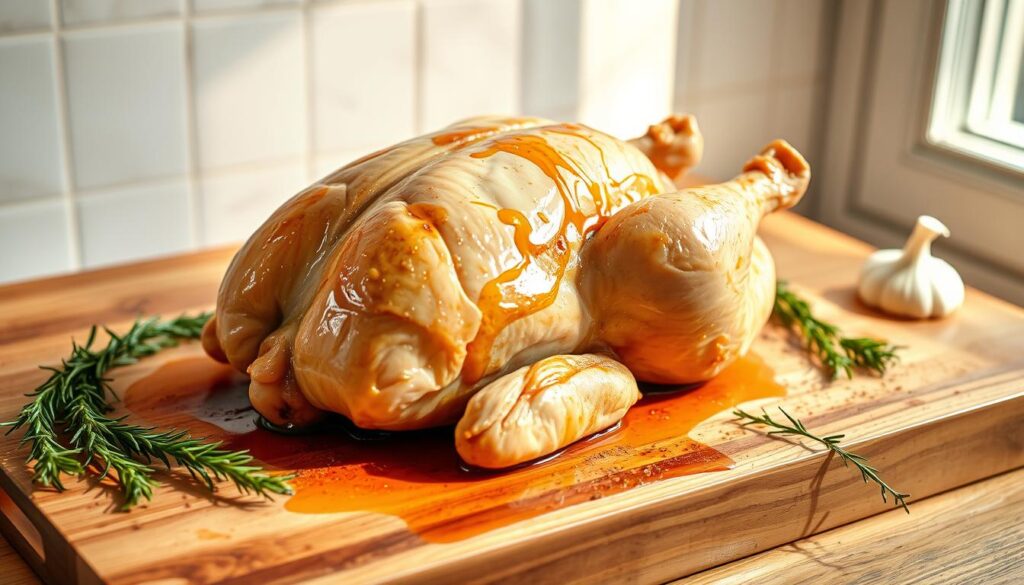
Start your Cornish hen cooking journey with the spatchcock technique. It changes how you cook poultry, making it even and crispy. Begin by placing the hen breast-side down on a cutting board.
To spatchcock a Cornish hen, follow these steps:
- Locate the backbone running along both sides of the cavity
- Use sharp kitchen shears or a chef’s knife to cut along both sides of the backbone
- Remove the backbone completely
- Flip the bird breast-side up
- Press firmly on the breastbone until you hear it crack
- Ensure the hen lies completely flat
The spatchcock method is great for home cooks. When the bird is flattened, thicker breast meat and thinner thigh meat are at approximately the same distance from the heat source. This stops breast meat from drying out before thighs are safe.
| Cooking Method | Cooking Time | Skin Crispiness |
|---|---|---|
| Traditional Whole Hen | 60-65 minutes | Partially Crispy |
| Spatchcock Method | 50-55 minutes | Fully Crispy |
For the best results, cook the spatchcocked hen skin-side up. Use a wire rack over a sheet pan. Set your oven to 400°F for convection or 425°F without. Cook for 50-55 minutes until the breast hits 165°F. Remember, save the backbones for homemade chicken stock.
Best Temperature for Cornish Hen and Internal Temperature Guidelines
Cooking Cornish hens needs precision and the right tools for a delicious and safe meal. The key is understanding temperature and using the right measuring techniques.
Using a Meat Thermometer to Check Doneness
Choosing the right meat thermometer is key for cooking Cornish hens. Instant-read digital thermometers give the most accurate results. To check doneness, put the thermometer in the thickest part of the thigh, near the body but not touching the bone.
- Choose a digital instant-read thermometer
- Insert into the thickest part of the thigh
- Ensure thermometer slides in easily
- Check temperature within 2-3 seconds
The thigh is the best spot for testing because it’s the last part to reach safe temperature. Remember to also check the breast meat, as thighs cook slower.
Why 165°F is the Magic Number for Food Safety
The USDA says 165°F is the minimum safe internal temperature for all poultry. This temperature kills harmful bacteria like Salmonella and Campylobacter, making your Cornish hen safe to eat.
| Temperature Range | Cooking Outcome |
|---|---|
| Below 160°F | Unsafe – Risk of foodborne illness |
| 160-164°F | Potentially risky, needs careful monitoring |
| 165°F | Safe and perfectly cooked |
| Over 170°F | Dry and tough meat |
Note: While some chefs cook chicken to 160°F and let it cook more, the safest way is to reach 165°F directly.
Use a quality thermometer to avoid undercooked or overcooked meat. An instant-read digital thermometer ensures perfect results every time.
Seasoning and Flavoring Your Cornish Hen for Maximum Taste
Turning your Cornish hen into a masterpiece begins with seasoning. There are three main ways to do this: rub seasoning under the skin, stuff the cavity with aromatics, and coat the skin with a flavorful mix.
To start, separate the skin from the meat gently with your fingers. Then, spread a tasty herb butter or oil-based paste underneath. This method ensures every bite is full of flavor.
Global Flavor Profiles to Explore
Try these international flavors to enhance your Cornish hen:
- Mediterranean: Olive oil, oregano, lemon, garlic
- Latin-Inspired: Lime, cumin, chili powder, cilantro
- Asian-Fusion: Soy sauce, ginger, sesame oil, five-spice
- French: Herbes de Provence, Dijon mustard, white wine
- Southern American: Paprika, cayenne, garlic powder, onion powder
Brining and Marinating Techniques
Knowing the difference between dry rubs and wet marinades is key. Dry brining with salt and spices 12-48 hours before cooking gives the best flavor and skin. Wet marinades, used 2-4 hours before, add flavor but can make the skin less crispy unless dried well.
“The key to exceptional Cornish hen is layering flavors through strategic seasoning techniques.” – Professional Chef
For a final touch, brush your Cornish hen with melted herb butter, hot honey, or balsamic glaze in the last 10 minutes. These touches add richness and make your dish look amazing, impressing your guests.
Stuffed Cornish Hen Cooking Time and Special Considerations
Stuffing a Cornish hen makes your dish more flavorful. But, it also means you need to watch cooking times and keep food safe. It’s important to know how stuffing changes your cooking and make sure both the meat and stuffing are hot enough.
Stuffing a Cornish hen changes how you cook it. The stuffing must be 165°F, not just the meat. So, you’ll need to check the stuffing’s temperature with a thermometer.
Timing Modifications for Stuffed Cornish Hens
- For an unstuffed hen that takes 50 minutes at 425°F, add 10-20 minutes for stuffed hens
- With a combination method (425°F then 350°F), add 15 minutes to the lower-temperature phase
Best Practices for Stuffing Safety
- Make stuffing just before cooking
- Don’t refrigerate raw stuffed poultry
- Stuff loosely to let heat spread
- Take out all stuffing before storing leftovers
Other ways to cook include putting stuffing under the hen. This way, it gets tasty drippings without slowing cooking. Or, you could serve the dressing on the side. This makes cooking easier and safer.
Basting, Resting, and Serving Your Perfectly Roasted Cornish Hen
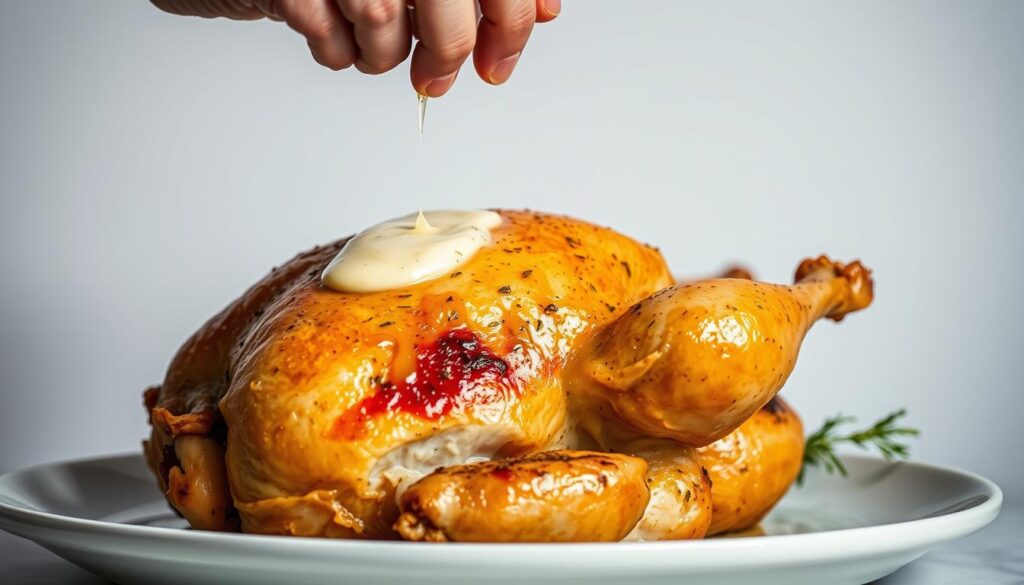
Mastering the art of basting is key to a delicious Cornish hen. Every 20 minutes, take the pan out of the oven. Tilt it to collect juices. Then, use a bulb baster or spoon to drizzle these juices over the hens, especially the breast meat.
Basting does more than keep your Cornish hen moist. Pro tip: Mix melted butter, hot honey, or herbs into your basting liquid for extra flavor. This method may add a few minutes to cooking time. But it greatly improves moisture and promotes even browning.
- Baste every 20 minutes
- Focus on breast meat
- Experiment with flavor-enhancing liquids
The resting period is crucial for a perfect Cornish hen. After reaching 165°F, remove the hens from the oven. Tent them loosely with foil and let them rest at room temperature for 5-10 minutes before serving.
Science shows why resting is important. Heat pushes juices to the meat’s center during cooking. Resting lets proteins relax and juices redistribute. This ensures moist, succulent meat instead of juices running out.
Carving and Presentation Techniques
For elegant plating, cut along the breastbone from neck to tail with sharp shears or a knife. Separate each hen into two halves. Serve half a hen per person on individual plates, drizzling pan juices over the top. Or, present whole hens for a dramatic tableside carving experience.
Elevate your presentation with beautiful garnishes like:
- Fresh herb sprigs
- Roasted lemon halves
- Edible flowers
These touches will make your Cornish hens look as impressive as they taste. They’ll turn your dish from simple to spectacular.
Common Mistakes to Avoid When Cooking Cornish Hens in the Oven
Cooking Cornish hens can be tricky, even for experienced chefs. Knowing these common mistakes helps you make a perfect roasted Cornish hen every time.
To avoid dry and undercooked poultry, focus on key cooking techniques. Here are the main errors to avoid:
- Not patting hens dry before roasting stops you from getting that crispy skin everyone loves. Use paper towels to remove excess water.
- Skipping the resting period causes juice loss. Let your Cornish hen rest for 10-15 minutes to redistribute moisture.
- Not using a meat thermometer means you’ll guess the doneness. This can lead to unsafe or unappetizing meat.
Temperature and Cooking Technique Mistakes
Cooking temperatures are crucial for Cornish hens. Overcrowding the pan stops air from circulating, leading to uneven cooking. Make sure there’s enough space between hens for even heat.
Cooking at too low a temperature makes the skin rubbery and the meat undercooked. Aim for a consistent oven temperature of around 425°F for a crispy exterior and juicy interior.
- Always bring refrigerated hens to room temperature before roasting
- Tuck wing tips to prevent burning
- Minimize opening the oven door to keep the temperature steady
Avoiding these common mistakes turns your Cornish hen into a culinary success. Patience, proper technique, and attention to detail are essential for success.
Conclusion
Preparing Cornish hens is easier than you think. With the right steps, you can make a meal that wows everyone. The secret is knowing how to handle temperature, timing, and prep for tender, juicy results.
After cooking, it’s important to store your Cornish hens right. Keep them in an airtight container in the fridge for 3-5 days. Use the pan juices to keep them moist. For longer storage, freeze them wrapped in plastic and foil for up to 3 months. When reheating, set your oven to 350°F for 15-20 minutes. Cover with foil and add a bit of water to keep it moist.
Try out different seasonings and cooking ways like roasting or spatchcocking. This will help you find your go-to method. Whether it’s for a quick dinner or a big event, you’ll be confident in your Cornish hen skills.
Don’t worry if it takes a few tries to get it right. Each time, you’ll get better at cooking these elegant birds. You now know how to make restaurant-quality Cornish hens at home.