
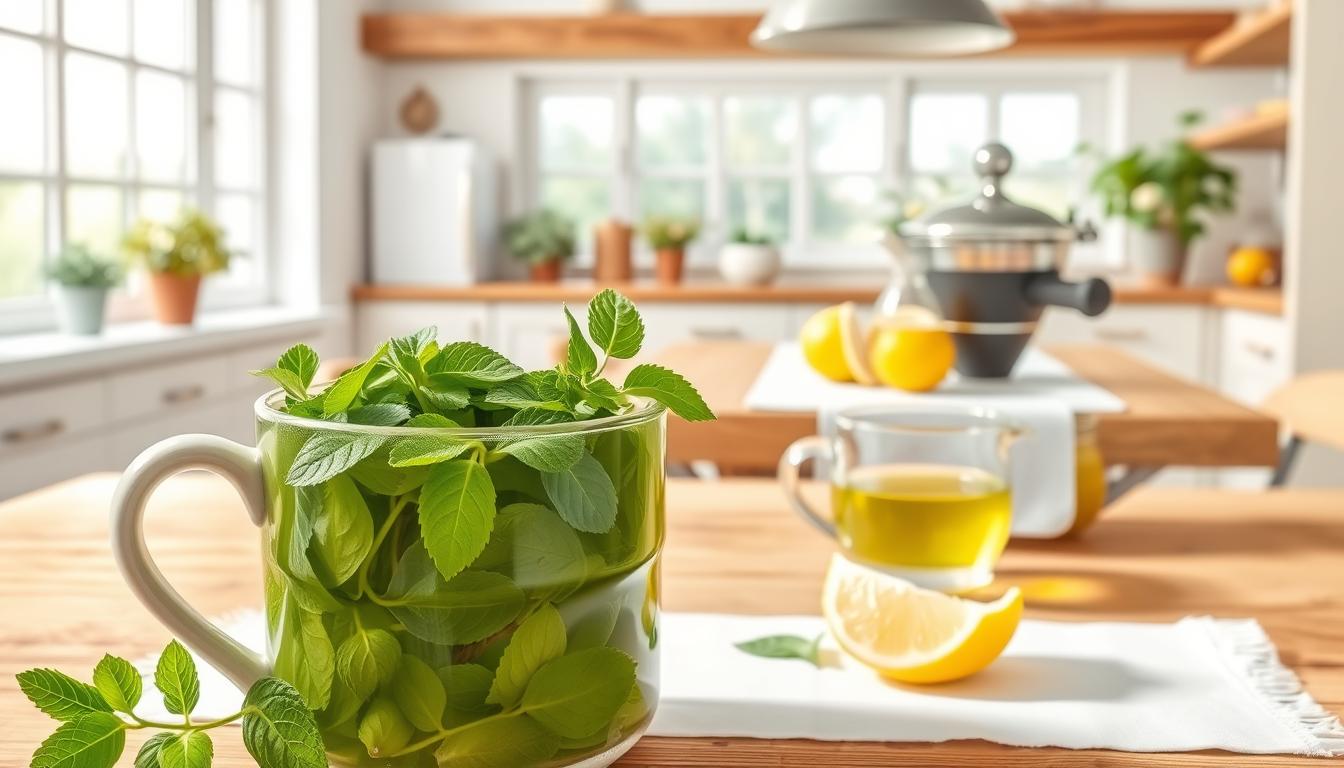
Making lemon balm tea is simpler than you think. It’s a calming drink that you can easily make at home. Whether you love tea or are just starting, making lemon balm tea is fun and easy.
Lemon balm tea is a great choice for those who want a caffeine-free drink. It has a light citrus taste and might even help you relax. This guide will help you make your own lemon balm tea, from picking out ingredients to mastering the brewing process.
Table of Contents
What Is Lemon Balm and Why Make Tea From It
Lemon balm, known scientifically as Melissa officinalis, is more than just a nice smell. It’s a versatile plant from the mint family, loved for centuries in medicine and cooking.
Understanding Melissa Officinalis
Lemon balm comes from Europe and the Mediterranean. It has heart-shaped leaves that smell like lemon when you crush them. It’s easy to grow in gardens and pots, perfect for making tea at home.
- Botanical family: Mint (Lamiaceae)
- Plant type: Perennial herb
- Leaf characteristics: Heart-shaped with lemon fragrance
- Cultivation: Easy to grow in gardens and containers
Health Benefits of Lemon Balm Tea
Drinking lemon balm tea has many health benefits. It’s not just tasty; it also helps with mental and physical health.
| Health Benefit | Description |
|---|---|
| Stress Reduction | Helps calm nervous system and reduce anxiety |
| Antioxidant Properties | Supports overall cellular health |
| Sleep Support | Promotes relaxation and improved sleep quality |
| Digestive Health | May help alleviate mild digestive discomfort |
Making lemon balm tea is simple, making it a great choice for a caffeine-free drink. Its mild lemon taste is soothing and refreshing, perfect for any time of day.
“Lemon balm tea is nature’s way of offering relaxation in a cup.” – Herbal Medicine Expert
Fresh vs Dried Lemon Balm Leaves for Tea
When making lemon balm tea, you have two main choices: fresh or dried leaves. Each option has its own benefits that can make your tea better.
Fresh lemon balm leaves add a lively, zesty flavor to your tea. They come straight from the garden, offering a strong lemon scent and a light taste. For the best flavor, use a bunch of fresh leaves for each cup.
- Fresh leaves require larger quantities
- Provide more intense aromatic profile
- Best when harvested during growing season
Dried lemon balm leaves are easy to use and keep their flavor all year. You only need 1-2 teaspoons for each cup. The drying process makes the herb’s oils stronger, giving you a deeper tea taste.
When picking your lemon balm leaves, consider a few things:
- Leaf quality and color
- Storage conditions
- Intended brewing method
Whether you pick fresh or dried leaves, make sure they’re green, smell good, and don’t have any brown spots. Avoid brown or musty leaves because they can ruin your tea’s taste and health benefits.
Essential Ingredients and Tools You’ll Need
Making a homemade lemon balm infusion is all about preparation and the right stuff. Whether you love tea or are just starting out, having the right tools and ingredients is key. This way, you’ll always get a great cup of tea.
Basic Ingredients for Your Lemon Balm Tea
Your homemade lemon balm infusion starts with a few key ingredients:
- Lemon Balm Leaves: Fresh or dried, using 1-2 teaspoons per cup
- Clean, fresh water (filtered or spring water recommended)
- Optional flavor enhancers:
- Honey
- Lemon slices
- Fresh mint leaves
Recommended Tea Making Equipment
Here are the essential tools for your homemade lemon balm infusion:
- Teapot or heat-resistant container
- Kettle for boiling water
- Fine-mesh strainer or tea infuser
- Measuring spoon
While a tea thermometer and timer are nice, they’re not necessary. Basic kitchen items will do the trick for a tasty lemon balm infusion.
How Do I Make Lemon Balm Tea
Making lemon balm tea is easy. It’s great for tea lovers and curious newcomers alike. This guide will show you how to make a tasty herbal tea.
- Select your lemon balm leaves (fresh or dried)
- Prepare hot water
- Steep the leaves
- Strain and enjoy
Start by picking quality lemon balm leaves. Fresh leaves from your garden or high-quality dried herbs work perfectly. Use about 1-2 teaspoons of leaves for each cup of water.
“Brewing herbal tea is an art that connects us with nature’s simplest pleasures” – Herbal Tea Enthusiast
Water temperature is important for flavor. Use water that’s just below boiling, around 190-200°F. Pour it over your lemon balm leaves and let them steep for 5-10 minutes.
| Leaf Type | Quantity | Steeping Time |
|---|---|---|
| Fresh Leaves | 2 teaspoons | 5-7 minutes |
| Dried Leaves | 1-2 teaspoons | 7-10 minutes |
After steeping, strain the leaves. Your lemon balm tea is now ready. You can drink it hot or cool it down for an iced version.
Preparing Your Lemon Balm Leaves Properly
Making fresh lemon balm tea begins with preparing your leaves right. The quality of your tea depends on how you handle and prepare the lemon balm. Whether you grow it at home or buy it, proper preparation makes your tea delicious and safe.
Harvesting Fresh Lemon Balm
Timing is key when picking lemon balm for tea. Here are some tips for choosing the best leaves:
- Pick leaves in the morning after dew has dried
- Choose vibrant green leaves without blemishes
- Select leaves from the top portions of the stems
- Look for leaves with a strong, lemony aroma
Cleaning and Handling the Leaves
Cleaning your lemon balm leaves is crucial. Follow these steps to get them ready:
- Rinse leaves gently under cool running water
- Remove any visible dirt or small insects
- Pat leaves dry with a clean towel
- Spread leaves on a clean surface to air dry
| Leaf Type | Preparation Method | Best Practices |
|---|---|---|
| Fresh Leaves | Rinse and pat dry | Use immediately after cleaning |
| Dried Leaves | Gently crush before brewing | Release additional flavor compounds |
Pro tip: Gently rubbing a leaf between your fingers can help release its essential oils and verify its freshness before brewing fresh lemon balm tea. This simple technique allows you to check the leaf’s quality and enjoy its aromatic properties.
Lemon Balm Tea Steeping Time and Temperature
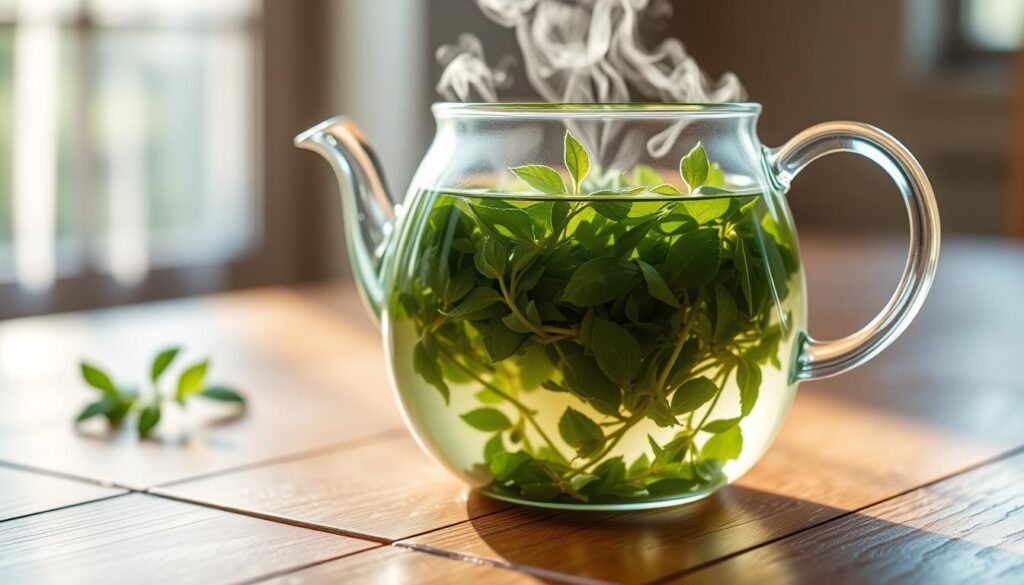
Getting the right lemon balm tea steeping time is key to enjoying its full flavor and benefits. Your brewing method greatly affects the taste and strength of your tea.
The water temperature is also very important for a great cup of lemon balm tea. Use water at boiling point, between 200-212°F (93-100°C). This high temperature helps get the herb’s oils and good stuff out.
Optimal Steeping Guidelines
- 5 minutes: Light, delicate flavor with subtle lemon notes
- 7-8 minutes: Well-balanced brew with full flavor development
- 10 minutes: Strongest tea with maximum compound extraction
Here are some tips for managing your lemon balm tea steeping time:
- Cover your brewing vessel to keep the heat in
- Use fresh, boiling water
- Take out the leaves quickly to avoid bitterness
| Steeping Duration | Flavor Intensity | Recommended Use |
|---|---|---|
| 5 minutes | Mild | Beginners, light taste preference |
| 7-8 minutes | Medium | Balanced flavor seekers |
| 10 minutes | Strong | Experienced tea drinkers |
Try different times between 5-10 minutes to find your ideal lemon balm tea steeping time. Remember, longer steeping can make the tea bitter, so be careful with your timing.
Hot Lemon Balm Tea Recipe Step by Step
Making lemon balm tea is easy. You can use fresh or dried leaves. This guide will show you how to make a soothing and tasty herbal tea.
Creating herbal tea needs focus and a few steps. The quality of your tea depends on the leaves you choose and how you brew it.
Brewing Fresh Lemon Balm Tea
Here’s how to make tea with fresh leaves:
- Gather 5-8 fresh lemon balm leaves per 8-ounce cup
- Rinse leaves gently under cool water
- Pat leaves dry with a clean towel
- Place leaves in a heat-resistant cup or teapot
- Bring water to a full boil
- Pour boiling water directly over the leaves
- Cover the vessel to trap steam and aromatic compounds
- Steep for 8-10 minutes
- Strain leaves using a fine-mesh strainer
Making Tea with Dried Lemon Balm Leaves
Dried leaves need a different method:
- Measure 1-2 teaspoons of dried leaves per 8-ounce cup
- Place leaves in a tea infuser or directly in the teapot
- Gently crush leaves to release essential oils
- Pour freshly boiled water over the leaves
- Cover and steep for 5-7 minutes
- Strain thoroughly to remove leaf particles
Pro tip: Try different steeping times to find your favorite flavor. Some like it strong, others prefer it light.
Making Refreshing Iced Lemon Balm Tea
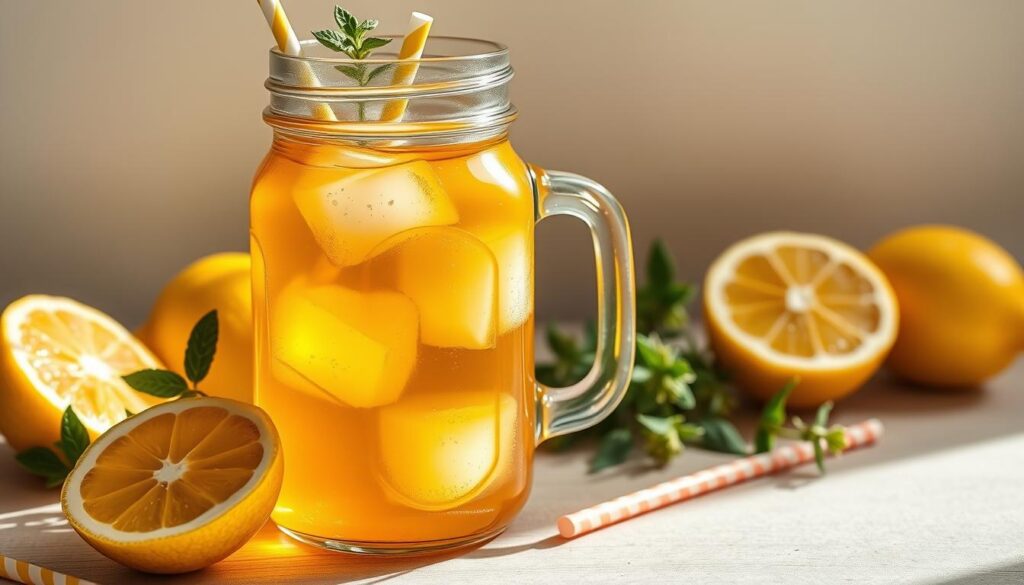
Turn your homemade lemon balm infusion into a refreshing summer drink. It will make your taste buds happy and cool you down. Iced lemon balm tea is great for hot days and lets you enjoy the herb’s light taste.
To make your iced tea just right, start with a stronger lemon balm infusion. Here are some tips:
- Use 1.5 times more lemon balm leaves than for hot tea
- Choose between fresh (7-12 leaves) or dried (1.5-3 teaspoons) leaves
- Steep for the full 10 minutes to extract maximum flavor
You can cool your tea in two ways:
- Slow cooling: Let tea cool to room temperature, then refrigerate for 1-2 hours
- Quick cooling: Pour hot tea directly over ice cubes for immediate chilling
Make your lemon balm infusion even better with creative garnishes:
- Fresh lemon slices for citrus brightness
- Strawberry or cucumber pieces for flavor depth
- Mint sprigs for additional herbal notes
- Honey as a natural sweetener
Serve your iced lemon balm tea in tall glasses filled with ice. It looks great and tastes amazing, showing off the herb’s natural beauty.
Enhancing Your Homemade Lemon Balm Infusion
Turning your basic calming herbal tea into a special drink is simple. Just add a few things to make your lemon balm tea stand out.
Natural Sweeteners to Delight Your Palate
Adding sweetness to your lemon balm tea can open up new flavors. Here are some great natural sweeteners:
- Honey: A classic choice that complements the herb’s delicate flavor
- Maple syrup for a rich, woodsy sweetness
- Agave nectar for a mild, smooth touch
- Stevia for a zero-calorie alternative
Herb Pairings to Amplify Relaxation
Make your calming herbal tea even better by mixing it with other herbs:
- Chamomile: Enhances relaxation and creates a soothing blend
- Mint: Adds refreshing coolness and digestive support
- Lavender: Provides additional calming effects (use sparingly)
- Rose petals: Introduces a gentle floral note
Pro tip: Try different mixes to find your favorite calming herbal tea. Start small and adjust to taste.
The magic of herbal tea lies in its ability to be personalized to your exact liking!
Calming Herbal Tea Recipe Variations
Trying out different calming herbal tea recipes can make your melissa officinalis tea preparation fun. Lemon balm is very versatile. It lets you make unique blends for different moods and health needs.
Here are some lovely calming herbal tea recipe variations to try:
- Bedtime Blend: Combine lemon balm with chamomile and lavender for ultimate relaxation
- Digestive Soother: Mix lemon balm with mint and fresh ginger to calm your stomach
- Immune Boost: Create a wellness drink by adding echinacea and lemon juice
- Stress Relief: Blend lemon balm with holy basil and cinnamon
Each variation offers special benefits for your melissa officinalis tea. The trick is to try different herb mixes to find your favorite calming herbal tea recipe.
| Recipe Variation | Key Ingredients | Primary Benefit |
|---|---|---|
| Bedtime Blend | Lemon Balm, Chamomile, Lavender | Sleep Support |
| Digestive Soother | Lemon Balm, Mint, Ginger | Digestive Comfort |
| Immune Boost | Lemon Balm, Echinacea, Lemon | Immune System Support |
| Stress Relief | Lemon Balm, Holy Basil, Cinnamon | Stress Reduction |
Remember to adjust the amounts based on your taste and desired effects. Start with small amounts and then tweak your perfect calming herbal tea recipe.
Conclusion
Making lemon balm tea is more than just a drink. It’s a way to connect with nature’s healing power. This tea offers many health benefits, making it a natural way to improve your daily life.
You now know how to make different types of lemon balm tea. You can enjoy it hot or cold, using fresh herbs or dried leaves. This knowledge lets you create the perfect cup for yourself.
Adding lemon balm tea to your daily routine is a great idea. It can help you relax, support your health, and even aid digestion. Start with simple recipes and then try new blends to meet your wellness needs.
Enjoy the simple beauty of lemon balm tea. Each cup is a chance to slow down, breathe, and care for yourself. It connects you to a long history of herbal wisdom.