
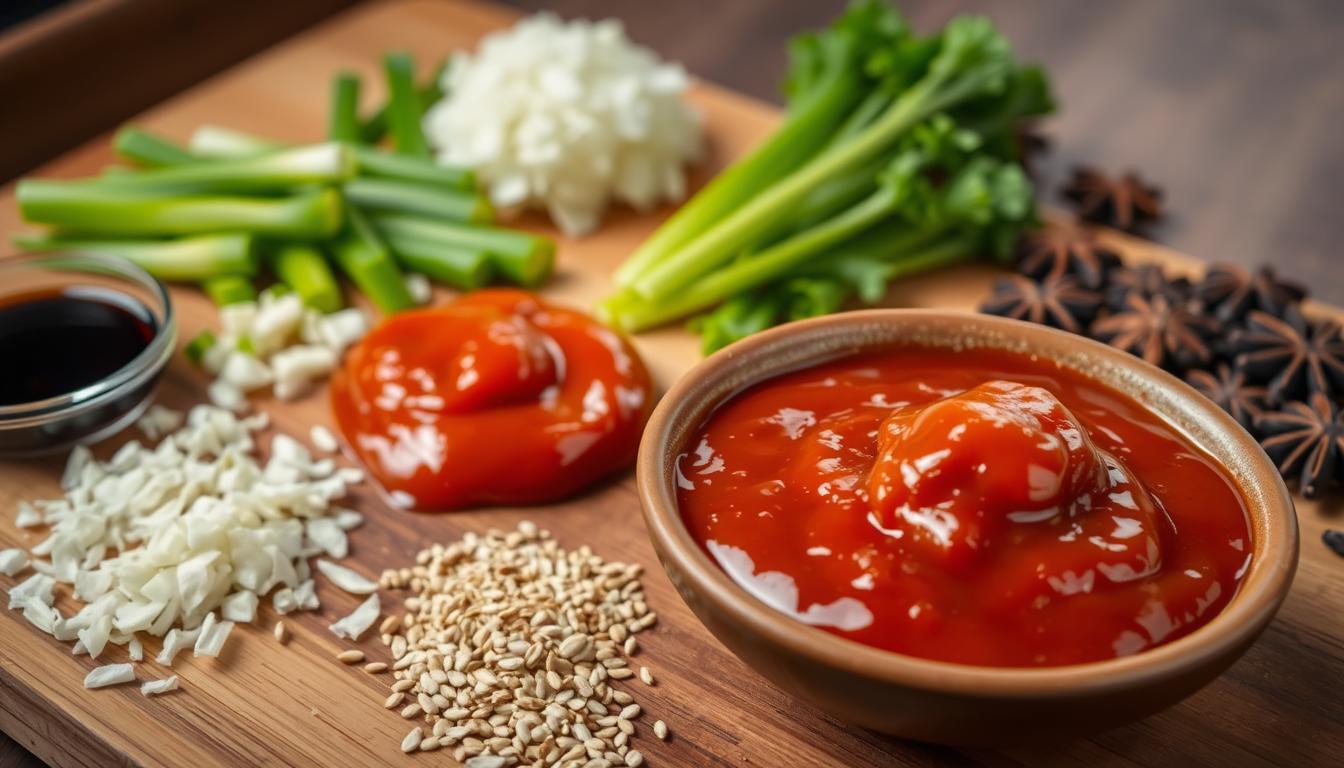
Discovering Korean beef marinade turns regular meat into a special dish. The secret is in the mix of sweet and savory tastes. Bulgogi sauce is at the core of Korean food, making simple beef taste like a gourmet meal.
Learning how to make Korean beef marinade opens up a world of deep flavors. These flavors have made Korean BBQ famous around the globe. Each part of the marinade is important, making the meat tender and full of taste that will wow everyone.
Table of Contents
Understanding Traditional Korean Beef Marinade
Korean cuisine is known for its rich flavors that have won hearts around the world. At its core is the kalbi marinade, a mix of sweet, savory, and umami tastes. These flavors are key to Asian BBQ sauce techniques.
Korean beef marinades are more than a cooking method. They are a cultural tradition passed down through generations. This art of marinating turns simple ingredients into unforgettable meals.
Origins of Korean BBQ Marinades
The kalbi marinade’s roots go back to traditional Korean cooking. These marinades were created to:
- Tenderize tough meat cuts
- Enhance flavor profiles
- Preserve meat before refrigeration
Key Flavor Profiles in Korean Cuisine
Korean cooking is all about blending unique tastes in every Asian BBQ sauce. The main flavors include:
| Flavor Element | Key Ingredients | Taste Contribution |
|---|---|---|
| Sweet | Brown Sugar, Honey | Caramelization and depth |
| Savory | Soy Sauce, Garlic | Umami and richness |
| Tangy | Rice Vinegar | Brightness and balance |
Cultural Significance of Marinated Beef
In Korean culture, marinated beef is more than just food. It’s a way to connect with others. Family gatherings and celebrations often involve grilling, with the kalbi marinade symbolizing hospitality and togetherness.
The careful making of the perfect marinade shows the Korean value of jeong. This is the emotional bond between people and food.
Essential Ingredients for the Perfect Korean Beef Marinade
To make a real soy garlic marinade, you need to know the key ingredients. Each one is important for the rich, complex flavors of Korean food.
Start with these must-have ingredients:
- Soy Sauce: The main flavor that adds depth and saltiness
- Garlic: Gives strong aromatic notes
- Gochujang marinade: Adds spicy-sweet complexity
- Sesame Oil: Brings nutty undertones
- Brown Sugar: Balances savory with sweetness
Knowing how each ingredient works is crucial for a great marinade. Soy sauce gives the basic umami taste. Gochujang adds a special Korean touch that makes the dish stand out.
| Ingredient | Flavor Profile | Purpose |
|---|---|---|
| Soy Sauce | Salty, Umami | Base flavor and tenderizing agent |
| Gochujang | Spicy, Sweet | Adds depth and Korean authenticity |
| Sesame Oil | Nutty, Rich | Provides aromatic complexity |
| Brown Sugar | Sweet | Balances and caramelizes |
Pro tip: The secret to a great soy garlic marinade is finding the right balance. Try different amounts to get the perfect mix that captures Korean barbecue’s essence.
The Role of Asian Pear in Meat Tenderizing
Asian pear is a secret ingredient in making a top-notch korean beef marinade. It adds more than flavor to your dishes. It’s a powerful meat tenderizer that turns tough beef into tender treats.
The magic of Asian pear comes from its natural enzymes. These enzymes break down proteins, making meat softer and more tender. Using Asian pear in your marinade adds sweetness and tenderness to your beef.
Natural Enzyme Benefits
Asian pears have special enzymes that tenderize meat naturally. These enzymes do several things:
- Break down tough muscle fibers
- Release moisture trapped in the meat
- Make the meat texture more delicate
- Improve how well the meat absorbs flavors
Substitutes for Asian Pear
Can’t find Asian pear? No worries. You can use other fruits as substitutes:
- Kiwi fruit
- Papaya
- Pineapple
- Grated raw onion
Proper Preparation Techniques
To get the most out of the Asian pear, grate or puree it before adding it to your marinade. Use about 1/4 cup of pear for every pound of meat. This helps spread the enzymes and flavors evenly.
Soy Garlic Base: The Foundation of Korean Marinades

The soy garlic marinade is a key part of Korean cooking. It turns simple meats into amazing dishes with its deep flavors. To start, you need to know how to mix soy sauce and garlic just right.
Here are the main parts of a true soy garlic marinade:
- High-quality dark soy sauce
- Fresh crushed garlic cloves
- Minced garlic for intense flavor
- Sesame oil for depth
Making the best soy ginger sauce takes care. Soy sauce and garlic together make a strong base. This base tenderizes and boosts meat flavors. Chefs say using fresh ingredients is key for the best taste.
| Ingredient | Quantity | Purpose |
|---|---|---|
| Soy Sauce | 1/2 cup | Primary flavor base |
| Crushed Garlic | 4-5 cloves | Aromatic intensity |
| Sesame Oil | 2 tablespoons | Depth and richness |
When making your soy garlic marinade, fresh garlic is crucial. Avoid pre-minced versions because they don’t have the same fresh taste. The goal is to mix everything so well that it brings out the best in your meat.
“Great marinades are about balance and respect for ingredients” – Korean Culinary Experts
Balancing Sweet and Savory Elements
Making the perfect bulgogi sauce is all about mixing flavors that excite your taste buds. The secret to a great Korean BBQ recipe is blending sweet and savory perfectly.
Sugar Types and Flavor Dynamics
In Korean cooking, not all sugars are the same. Each type can change your bulgogi sauce in amazing ways:
- Brown sugar: Adds deep caramel notes
- Honey: Provides natural sweetness and gloss
- Korean corn syrup: Creates smooth, consistent flavor
Umami Enhancement Techniques
Umami is what makes Korean marinades so special. By mixing certain ingredients, you can boost your korean bbq recipe:
| Ingredient | Umami Impact |
|---|---|
| Soy Sauce | High glutamate content |
| Mushroom Powder | Intense savory undertones |
| Fermented Ingredients | Complex flavor development |
Flavor Layering Methods
Building flavor is an art, say professional chefs. Start with a strong base, add complementary flavors, and finish with subtle notes. This way, you create a bulgogi sauce that turns simple meat into a memorable dish.
Best Cuts of Beef for Korean Marinade
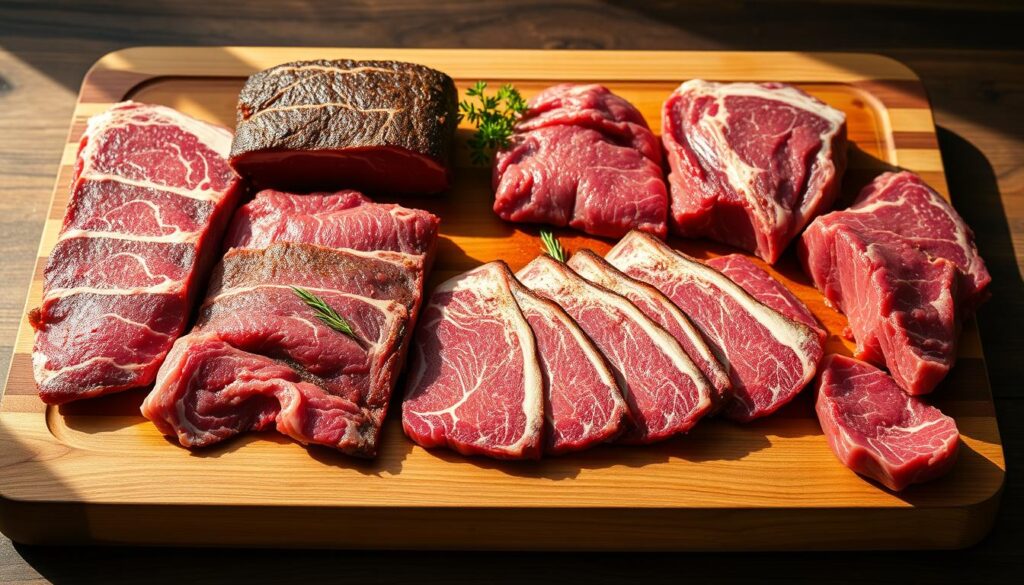
Choosing the right beef cut can make your kalbi marinade stand out. The best cut lets the marinade soak in deeply. This makes the meat tender and full of flavor, impressing everyone at dinner.
For traditional Korean beef dishes, some cuts are better than others. They offer great taste and texture:
- Short Ribs (Kalbi): The classic choice for kalbi marinade, these ribs offer rich marbling and intense beef flavor
- Sirloin: Lean and tender, perfect for bulgogi-style preparations
- Ribeye: Provides excellent fat content for juicy, flavorful results
- Flank Steak: Affordable option that absorbs korean beef marinade beautifully
The meat you choose greatly affects the dish. Thinner cuts like flank steak soak up marinades quickly. Thicker cuts, like short ribs, need more time to get that deep flavor.
Pro tip: Ask your local butcher to slice the meat thinly against the grain. This makes the meat tender and lets the marinade get into every part of the meat.
“The right cut is the foundation of an authentic Korean beef experience.”
Proper Marinating Techniques and Timing
Mastering the art of marinating is key for a great korean bbq recipe. The right method can make your galbi marinade amazing. It ensures your dish is full of flavor and tender.
Creating the perfect marinade needs focus on a few important factors. These factors greatly affect your Korean beef dish’s outcome.
Temperature Insights for Optimal Marination
Marinades work best when ingredients are at the right temperature. Here are some critical guidelines:
- Keep meat refrigerated during marination
- Aim for a consistent temperature between 34-40°F
- Never marinate at room temperature to prevent bacterial growth
Marination Duration Guidelines
The length of marinating greatly affects your galbi marinade’s success:
- Thin cuts: 30 minutes to 2 hours
- Thicker cuts: 2-8 hours
- Maximum recommended time: 12 hours
Safe Storage Methods
Proper storage keeps your korean bbq recipe safe and tasty:
- Use non-reactive containers (glass or ceramic)
- Always marinate in the refrigerator
- Discard used marinade or boil thoroughly if reusing
- Store marinating meat in sealed containers
By using these techniques, you’ll make a delicious Korean beef dish that’s as good as any restaurant’s.
Cooking Methods for Marinated Korean Beef
Learning to cook marinated Korean beef is all about mastering different techniques. Each method brings out the flavors of your korean bbq recipe in its own way. This turns your meat into a delicious dish.
Grilling: The Classic Korean BBQ Approach
Grilling is the most authentic way to cook Korean beef. It gives a caramelized outside and a juicy inside. Here’s how to grill it right:
- Preheat grill to medium-high heat
- Remove meat from marinade and pat dry
- Cook 3-4 minutes per side for medium doneness
- Let meat rest for 5 minutes before slicing
Pan-Frying: Indoor Cooking Alternative
If you don’t have a grill, pan-frying is a great choice. Use a cast-iron skillet or heavy-bottomed pan for similar results.
| Cooking Method | Cooking Time | Heat Level |
|---|---|---|
| Grilling | 6-8 minutes total | Medium-high |
| Pan-Frying | 8-10 minutes total | Medium |
| Broiling | 5-7 minutes total | High |
Broiling: Quick and Intense Cooking
Broiling is fast and creates a beautiful char. Place your beef 4-6 inches from the broiler. Watch it closely to avoid burning.
No matter the method, keep the meat tender. A rich, caramelized exterior is key. It shows off the marinade’s depth.
Tips for Achieving Restaurant-Quality Results
Mastering korean beef marinade needs precision and detail. Professional chefs say it’s not just about the ingredients. It’s also about the technique.
To make your korean beef marinade better, follow these expert tips:
- Use high-quality, thinly sliced beef for optimal tenderness
- Allow sufficient marinating time (minimum 2 hours, maximum 8 hours)
- Pat meat dry before cooking to ensure proper caramelization
- Cook at high heat for quick, even searing
Temperature control is key for perfect results. Your bulgogi sauce should enhance the meat’s flavor without overpowering it. Aim for a balanced marinade that enhances rather than masks the beef’s quality.
| Technique | Impact on Flavor | Recommended Approach |
|---|---|---|
| Meat Slicing | Texture and Absorption | Slice against the grain, 1/8 inch thick |
| Marinating | Flavor Depth | Refrigerate, turn occasionally |
| Cooking | Caramelization | High heat, quick searing |
Lastly, practice makes perfect. Every try at making your korean beef marinade will teach you something new. It’s about balancing flavors and techniques.
Complementary Side Dishes and Serving Suggestions
Improving your korean bbq recipe is more than just the beef. The right side dishes and how you present them can make your meal unforgettable. It turns your kitchen into a true Korean dining spot.
A traditional Korean barbecue is about balance and variety. Your beef, marinated in asian bbq sauce, needs sides that match its rich taste.
Traditional Korean Accompaniments
Classic side dishes, called banchan, are key to a full Korean meal. They add texture and contrast to your main dish:
- Kimchi: Fermented cabbage with a spicy kick
- Pickled radishes: Crisp and tangy
- Sesame leaf wraps: Fresh and aromatic
- Steamed rice: Perfect for soaking up marinades
Modern Fusion Pairings
For a twist, try these side dish ideas that mix old and new flavors:
- Wasabi coleslaw
- Grilled vegetable medley
- Asian slaw with sesame dressing
- Crispy rice cakes
Presentation Tips
Your korean bbq recipe should look as good as it tastes. Serve side dishes in small, colorful bowls. Use wooden or traditional Korean dishes. Top with fresh herbs like cilantro or green onions for extra flavor and beauty.
Conclusion
Making a real korean beef marinade is more than just mixing stuff. It’s about finding the right mix of flavors that make bulgogi sauce special. You’ve learned how to turn regular beef into a dish that shows off Korean cooking’s heart.
You now know how to pick the best beef and mix sweet and savory just right. This means you can make dishes that taste like they’re from a restaurant, right in your kitchen. The fun of making your own korean beef marinade is just starting, with lots of taste and skill to discover.
Great cooking comes from passion and practice. Try out what you’ve learned and add your own twist. Every time you make it, you get better at making a bulgogi sauce that will wow everyone. It’s a way to connect with a cooking tradition that’s been loved for ages.
Start enjoying the art of Korean marinades and let your cooking skills grow. Your kitchen is now a place where you can explore Korea’s deep, rich flavors, one tasty bite at a time.