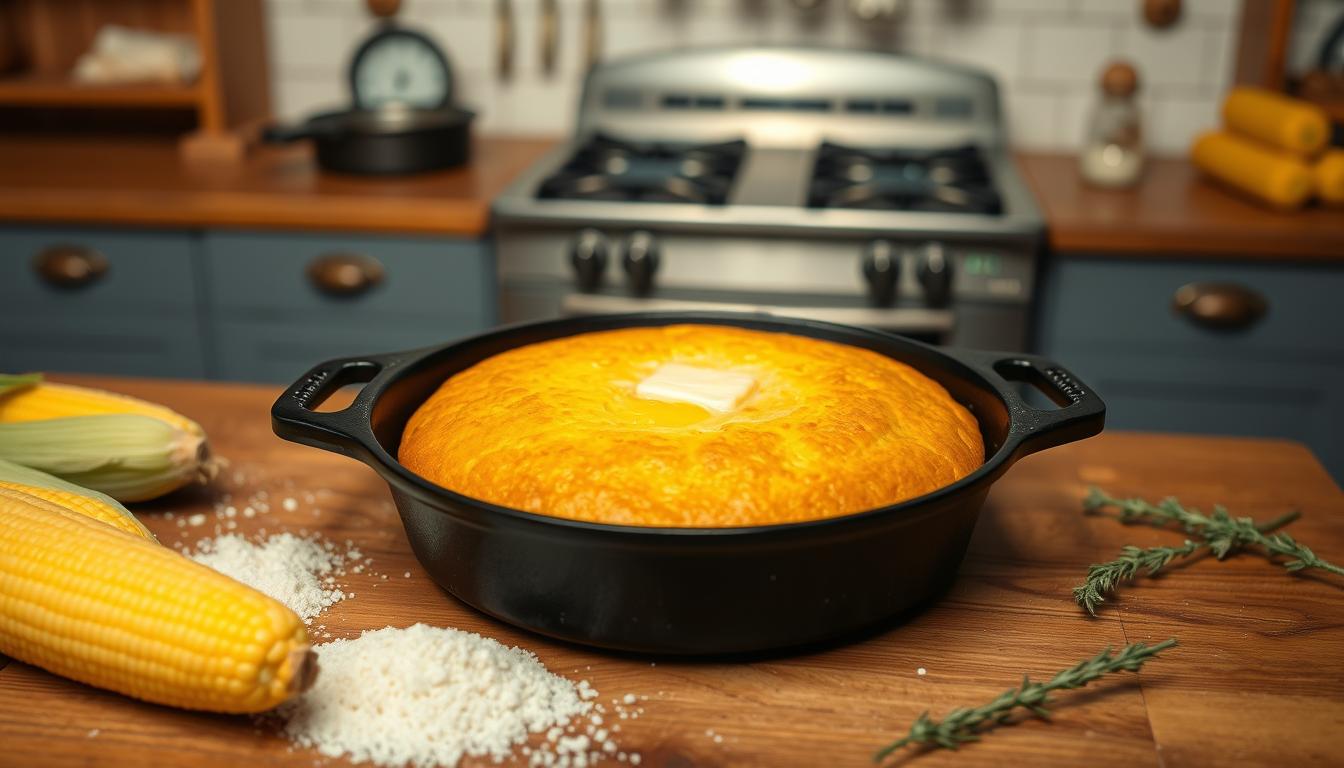
Southern skillet cornbread is more than a side dish. It’s a tradition in Southern kitchens. It turns simple ingredients into a golden, crispy masterpiece loved by families for generations.
Making authentic Southern cornbread in a cast-iron skillet is special. It’s not just cooking. It’s keeping a rich heritage alive with its warm, crumbly texture and rich flavor. Every bite shares a story of Southern cooking traditions passed down through families.
The magic of skillet cornbread is in its simplicity and how it’s made. A well-seasoned cast-iron skillet gives it a crispy outside and a tender, moist inside. It’s a delight to eat.
Table of Contents
What Makes Skillet Cornbread a Southern Classic
Southern cuisine is filled with beloved dishes, but cornbread stands out. This simple yet tasty staple connects generations through its flavor. It’s a key part of Southern culinary traditions.
Cornbread is more than a side dish in Southern kitchens. It’s a symbol of resourcefulness, family, and culinary creativity. It tells stories of the past.
The Rich History of Cornbread in Southern Cooking
Cornbread’s story starts with Native American cooking. Early settlers used these techniques to make bread from cornmeal. This bread helped families survive tough times.
- Corn pone: The earliest form of cornbread
- Buttermilk cornbread: A more refined version
- Regional variations: Hot water cornbread, corn sticks
The Magic of Cast Iron Skillets in Cornbread Making
A cast iron cornbread recipe needs the right cookware. Cast iron skillets are key for those crispy edges. They make Southern cooking famous.
| Cast Iron Skillet Benefit | Impact on Cornbread |
|---|---|
| Heat Retention | Creates golden-brown crust |
| Even Distribution | Ensures consistent cooking |
| Seasoning | Adds depth of flavor |
When you preheat a cast iron skillet and pour in batter, magic happens. The skillet’s sizzle makes the outside crispy. The inside stays tender and moist.
“A well-seasoned cast iron skillet is like a family heirloom in Southern kitchens.”
Essential Ingredients for Authentic Southern Cornbread
Making the perfect homemade cornbread starts with the right ingredients. Your buttermilk cornbread will stand out with the right mix of authentic Southern flavors.
The key to great cornbread is using top-notch ingredients. Let’s look at the must-haves that turn simple ingredients into a Southern classic:
- Fine-ground yellow or white cornmeal (primary base)
- Self-rising flour or all-purpose flour with leavening agents
- Fresh eggs for structure
- Buttermilk for rich, tangy moisture
- Vegetable oil or melted butter
Choosing the right cornmeal is crucial. Fine-ground cornmeal gives the perfect crumbly texture. Whether you prefer yellow or white cornmeal, both can make your cornbread amazing.
| Ingredient | Quantity | Purpose |
|---|---|---|
| Cornmeal | ¾-1½ cups | Provides corn flavor and texture |
| Flour | 1¼ cups | Adds structure and lightness |
| Buttermilk | 1-1½ cups | Creates moisture and tanginess |
| Eggs | 2 large | Binds ingredients together |
Pro tip for your buttermilk cornbread: Add a bit of bacon drippings for a savory twist. It’s optional but makes your cornbread truly special.
The White Cornmeal vs Yellow Cornmeal Debate
Choosing the right cornmeal is key for a great cornmeal skillet bread. The debate between white and yellow cornmeal is fierce. Both sides have passionate supporters.
Southern cooks know that cornmeal type greatly affects cornbread taste. White and yellow cornmeal come from different corn types. Each adds its own special touch to your bread.
Understanding Cornmeal Varieties
The main differences between white and yellow cornmeal are:
- Flavor Profile: Yellow cornmeal has a richer, sweeter taste
- White cornmeal has a lighter, more delicate corn flavor
- You can swap them in most cornmeal skillet bread recipes
Selecting the Perfect Grind
The texture of cornmeal is vital for your bread’s success. Fine-ground cornmeal makes a batter that’s smooth and fine. Coarse-ground cornmeal gives a cornbread with a rustic texture.
Top Cornmeal Brands for Authentic Recipes
For a true Southern cornbread, try these brands:
- Arnett’s Fine White Cornmeal
- Alabama King Cornmeal
- Hoover’s Stone-Ground Cornmeal
- Sholar’s Traditional Cornmeal
“The secret to great cornbread is in the cornmeal’s quality and grind.” – Southern Cooking Tradition
Try different brands and grinds to find your favorite cornmeal skillet bread. Each variety adds a special flavor to this Southern classic.
Why Buttermilk Makes All the Difference
Buttermilk cornbread is more than just a recipe. It’s a Southern tradition that turns simple bread into something special. The key ingredient? Buttermilk, which adds a unique touch to your cornbread.
“Honey, don’t even think about replacing the buttermilk with regular milk. It’s what makes this classic cornbread recipe so moist, fluffy, and just so darn flavorful!”
Using buttermilk in your cornbread brings many benefits:
- Creates a tender, soft crumb
- Adds a subtle tangy flavor
- Helps cornbread rise more effectively
- Increases moisture retention
The science behind buttermilk cornbread is interesting. Its acidity works with baking soda, making the cornbread light and fluffy. Southern bakers know buttermilk is more than just a liquid. It’s essential for the cornbread’s taste and texture.
| Ingredient | Impact on Cornbread |
|---|---|
| Buttermilk | Enhances flavor, improves texture, increases rise |
| Regular Milk | Flat taste, denser texture, less rise |
If you can’t find buttermilk, a substitute is vinegar or lemon juice in regular milk. But, the real deal is always better for authentic buttermilk cornbread.
How to Make Perfect Skillet Cornbread
Making the ultimate easy skillet cornbread is an art. It combines simple ingredients with precise techniques. Your journey starts with understanding the key steps to turn basic ingredients into a golden, crispy masterpiece.
Mastering homemade cornbread requires attention to detail and a few crucial techniques. These steps will help you create the perfect skillet cornbread. It will impress your family and friends.
Preparing Your Cast Iron Skillet
The foundation of great skillet cornbread is your cooking vessel. A well-seasoned cast iron skillet is key for that crispy crust. Here’s how to prepare it:
- Add 3 tablespoons of oil to a 10-inch cast iron skillet
- Place the skillet in the oven while preheating
- Heat to 375-400°F
Mixing the Batter for Optimal Texture
The key to an easy skillet cornbread is in the mixing technique. Follow these steps to create a smooth, lump-free batter:
- Sift dry ingredients in a large bowl
- Combine wet ingredients in a separate bowl
- Gently whisk wet and dry ingredients together
- Avoid overmixing to keep the texture tender
“The magic of cornbread is in its simplicity and the love you put into preparing it.”
When you pour the batter into the hot skillet, you’ll hear a satisfying sizzle. This sound signals the beginning of a perfect crust. Bake for 25-30 minutes until the top turns a light golden brown. Finish by brushing with melted salted butter for an extra layer of flavor.
Your homemade cornbread is now ready to become the star of any meal. Serve it alongside chili, barbecue, or enjoy it on its own.
The Sweet vs Savory Cornbread Controversy
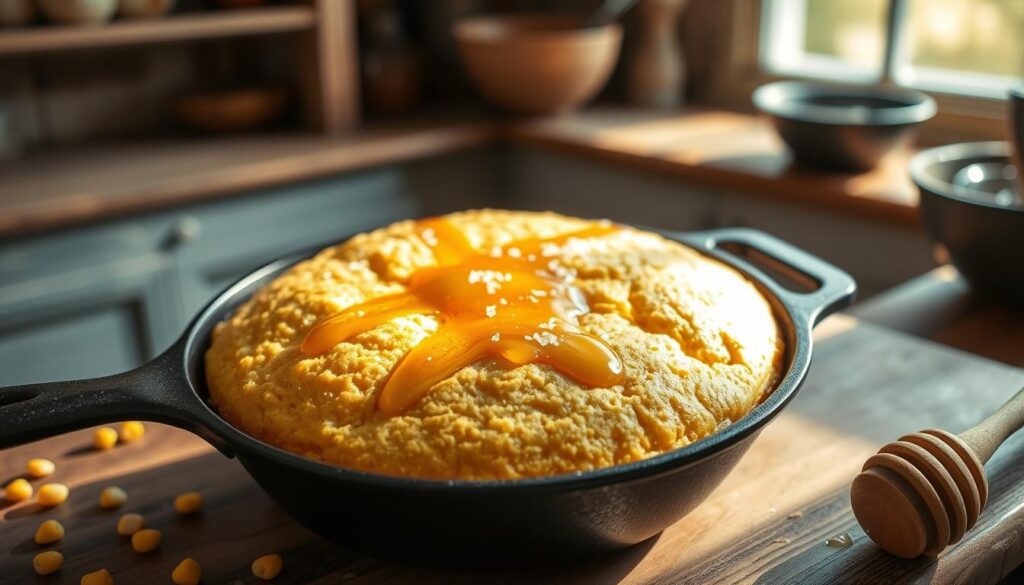
The debate over sweet versus savory cornbread is a big deal in Southern cooking. Making honey cornbread can start lively talks among cooks and chefs.
Some say traditional Southern cornbread should be all savory. They think adding sugar makes it too much like cake. They point out that sugar was rare and valuable in old times.
“Cornbread is a savory bread, not a dessert!” – Southern Cooking Traditionalist
But, many cooks like a hint of sweetness in their honey cornbread. A bit of sugar can make the corn taste better without making it too sweet.
- Traditional savory cornbread: No sugar added
- Modern adaptations: Light sugar or honey inclusion
- Compromise: Serve honey on the side
| Cornbread Style | Sugar Content | Typical Texture |
|---|---|---|
| Southern Traditional | None | Crumbly, dense |
| Modern Southern | ¼ cup sugar | Slightly tender |
| Northern Style | ½ cup sugar | Cake-like |
Your ideal honey cornbread is all about what you like. Some families keep their recipes close, while others try new things. The goal is to find a mix that keeps the bread’s rustic feel but also tastes great to you.
Tips for Achieving Crispy Edges and Moist Centers
Making the perfect skillet cornbread is an art. It needs precision and skill. You want crispy edges and a moist center that’s just right.
To get crispy edges, follow a few key steps. These steps can turn your cornbread into something amazing. It’s all about how heat and technique work together.
Preheating Your Skillet for a Golden Crust
Your cast iron skillet is crucial for crispy edges. Here are some tips:
- Put your cast iron skillet in the oven while it heats up
- Heat the skillet to 375-400°F before adding batter
- Add a thin layer of oil or butter to the hot skillet
- Pour batter into the sizzling hot pan for instant edge crispiness
Testing for Perfect Doneness
Knowing when your cornbread is done is easy with a few tricks:
- Use the toothpick test: Insert a toothpick into the center
- Look for light golden-brown edges
- Check for slight pulling away from skillet sides
- Aim for a 25-30 minute baking time
Pro tip: Brush melted butter on top right after it comes out of the oven. This adds flavor and a glossy look. Let it cool for 5-10 minutes before slicing for the best texture.
Creative Variations on Traditional Cornbread
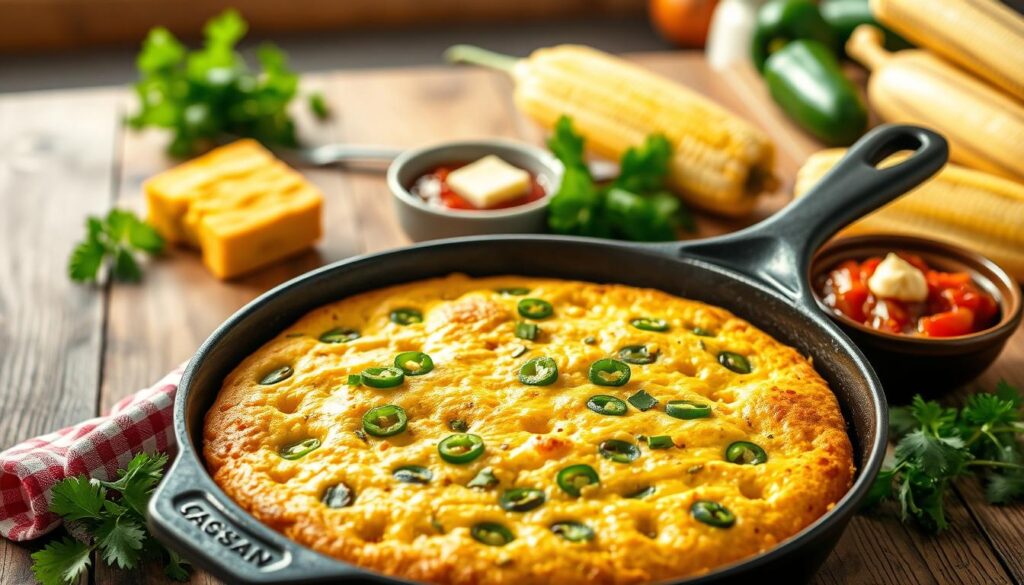
Take your jalapeño cornbread skillet to the next level with these creative twists. They will make your traditional recipe stand out. Southern cooking loves to innovate while keeping its roots strong, and cornbread is no different.
For those who love spice, a jalapeño cornbread skillet is perfect. It adds excitement to your meal. Try these tasty variations:
- Cheese Lover’s Cornbread: Mix in shredded cheddar and crispy bacon bits
- Southwestern Style: Add diced jalapeños and pepper jack cheese
- Herb-Infused Cornbread: Incorporate fresh rosemary or thyme
- Sweet Heat Version: Combine jalapeños with a drizzle of honey
Here are some key tips for making your jalapeño cornbread skillet:
- Seed jalapeños for less heat, or keep seeds for extra spice
- Distribute add-ins evenly throughout the batter
- Don’t overload – too many mix-ins can prevent proper rising
- Adjust baking time slightly for moisture-rich additions
“The secret to great cornbread is balancing tradition with creativity” – Southern Kitchen Wisdom
Your cornbread can become a canvas for culinary creativity. It can turn a simple side dish into a memorable centerpiece. It will spark conversation and delight your taste buds.
What to Serve with Your Homemade Cornbread
Southern cornbread is more than a side dish. It’s a culinary partner that adds richness and comfort to meals. Your freshly baked skillet cornbread can turn simple meals into unforgettable Southern dining experiences.
Classic Southern Meal Pairings
Southern cornbread pairs best with hearty, flavorful dishes. Here are some traditional meal combinations that will delight your taste buds:
- Smoky chili with a crisp cornbread topping
- Slow-cooked pork chops smothered in rich gravy
- Creamy beans and rice
- Tender collard greens
- Fried chicken with a side of golden cornbread
Creative Uses for Leftover Cornbread
Don’t waste a single crumb! Southern cornbread can be turned into tasty new dishes:
- Cornbread Dressing: Crumble day-old cornbread and mix with herbs and broth for a classic holiday side
- Crispy croutons for salads and soups
- Crumble into buttermilk for a traditional Southern snack
“My mama always said good cornbread makes any meal complete!”
Keep your leftover southern cornbread in an airtight container at room temperature for 2-3 days. Or freeze it for up to two months. Your next delicious meal is just a warm-up away!
Conclusion
Learning to make authentic skillet cornbread is more than just following a recipe. It’s about embracing a cherished Southern cooking tradition. With each golden, crispy batch, you connect to generations of home cooks.
The beauty of skillet cornbread lies in its simplicity. You’ve learned how quality ingredients and proper technique can transform basic pantry staples. Whether you like it savory or slightly sweet, you can customize it to your taste.
Home cooks who’ve tried this recipe love its rustic charm and exceptional flavor. One enthusiast said, “This savory Southern-style cornbread is the perfect all-purpose side.” Making it from scratch will elevate your cooking and say goodbye to bland boxed mixes.
Your skillet cornbread journey has just begun. Experiment, share with loved ones, and enjoy the delicious results. Southern cooking is about creating memorable moments around the table.
1 thought on “Skillet Cornbread Guide: A Traditional Southern Cornbread Recipe”