
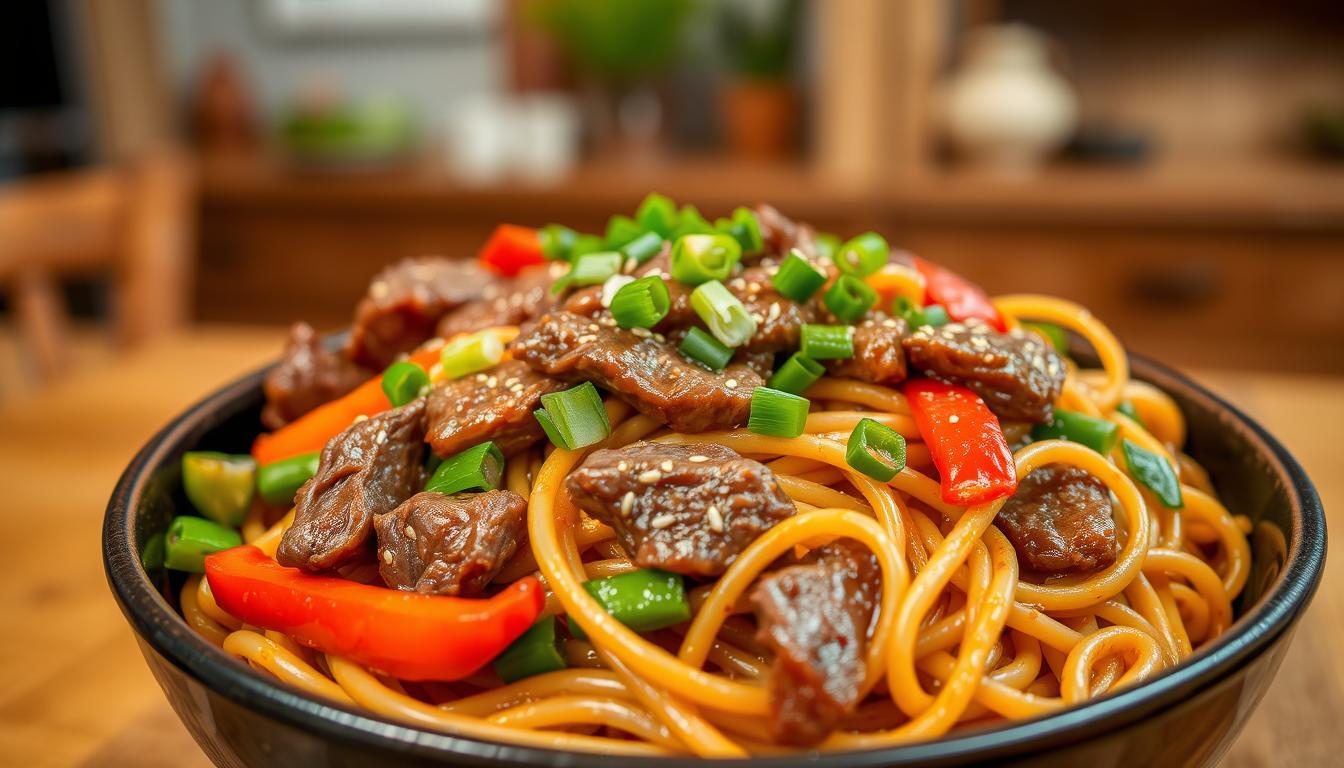
Want a tasty steak lo mein that’s better than takeout? You’re in the right spot! This beef lo mein recipe brings the real flavors of Chinese-American food right to your kitchen. In about 30 minutes, you can make a dish that’s full of tender steak, perfectly cooked noodles, and a savory sauce that will make your taste buds happy.
Lo mein, which means “mixed noodles” in Cantonese, is a dish that lets you show off your cooking skills. Whether you’re a home cook looking to grow your skills or just want a tasty meal, this steak lo mein recipe is perfect for everyone.
Table of Contents
What Is Steak Lo Mein and Why You’ll Love This Recipe
Explore the world of authentic Chinese beef noodles. It’s a journey that turns a simple stir fry into a meal fit for a restaurant. Lo mein, or “mixed noodles” in Cantonese, is more than a favorite takeout. It’s a dish with deep cultural roots.
Understanding Traditional Lo Mein
Lo mein has two main forms. The traditional Cantonese version has thin, chewy noodles with toppings and a soup. The American version is a thick noodle stir-fry with soy sauce, veggies, and protein.
- Original Cantonese style: Delicate noodles with separate soup
- American Chinese style: Hearty stir-fried noodle dish
- Flexible recipe that welcomes personal creativity
Why Homemade Beats Takeout Every Time
Making your own Chinese noodle stir fry is better than takeout. Homemade noodles are hot, fresh, and just how you like them. You’ll save money, choose better ingredients, and avoid restaurant additives.
Imagine a meal that’s:
- Fresher than any delivery option
- Customized to your exact preferences
- Prepared in less time than waiting for takeout
- Healthier with controlled ingredients
Your kitchen becomes a place where tradition meets your own touch.
Essential Ingredients for Authentic Beef Lo Mein
To make a tasty homemade lo mein with beef, start by getting the right ingredients. Your dish will be amazing if you pick each item carefully. This way, you’ll get layers of flavor and texture.
- Protein: 1 pound flank steak, thinly sliced
- Noodles: 8-16 ounces fresh lo mein noodles
- Aromatics: Fresh garlic and ginger
The sauce is what makes a great homemade lo mein with beef. Make sure you have these key sauce ingredients:
- Light soy sauce
- Dark soy sauce
- Oyster sauce
- Toasted sesame oil
- Brown sugar
- Chili paste
Your vegetable mix should include colorful options like bell peppers, mushrooms, carrots, broccoli, and scallions. Remember, choose fresh, crisp vegetables. They add crunch and nutrition to your dish.
Don’t forget pantry staples like cornstarch. It helps make the beef tender and coated just right. You can find most ingredients in your local grocery store’s international aisle or at Asian markets.
Choosing and Preparing the Perfect Cut of Beef
Creating a great steak lo mein begins with picking the right beef. The meat you choose can make or break this dish. Look for a cut that’s tender, flavorful, and can handle high heat.
Best Steak Cuts for Lo Mein
Not all beef cuts are the same for lo mein. The best ones are:
- Flank Steak: The top choice for steak lo mein
- Skirt Steak: Similar to flank in texture and taste
- Sirloin: Leaner but still tender
- Tri-Tip: Has a unique flavor
Slicing and Marinating Techniques
Getting your beef ready is key for a delicious lo mein. Slice the steak thinly (about 1/4 inch) against the grain. This makes it cook fast and stay tender.
| Marinating Ingredients | Purpose |
|---|---|
| Soy Sauce | Adds depth and tenderizes meat |
| Dark Soy Sauce | Provides rich color and umami flavor |
| Cornstarch | Creates protective coating for juicy meat |
| Egg White | Helps tenderize and seal in moisture |
The Secret to Tender, Juicy Beef
The secret to great steak lo mein is “velveting”. Marinate your beef for 2-24 hours, with overnight being best. The cornstarch and egg white form a barrier that keeps the meat juicy during cooking.
Pro tip: Always slice against the grain to ensure maximum tenderness in your steak lo mein!
The Best Lo Mein Noodles and Alternatives
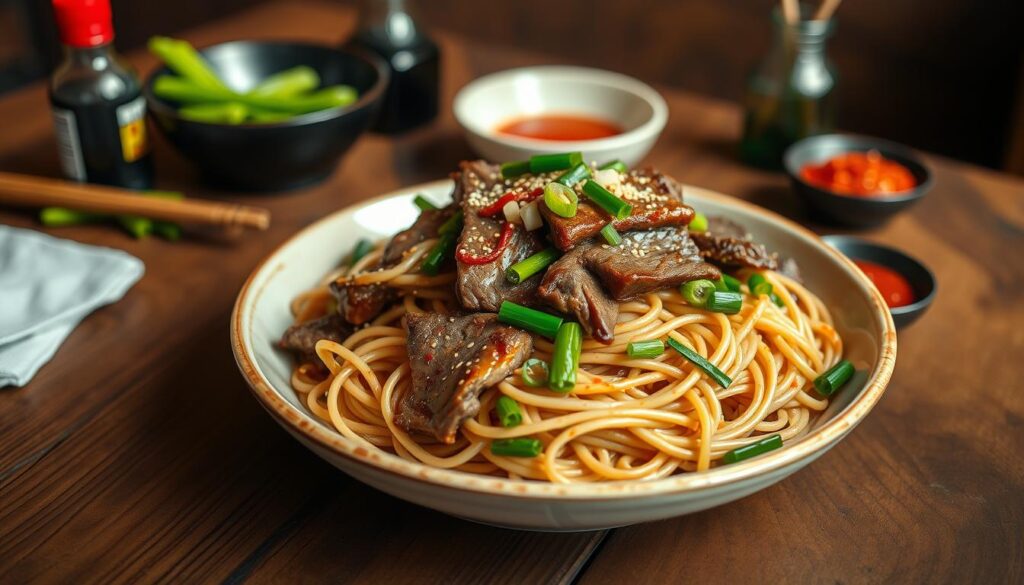
Choosing the right noodles is key for a great chinese noodle stir fry. Traditional lo mein noodles add a special texture and taste. They make your dish go from good to amazing.
When you’re looking for lo mein noodles, you’ll find three main types:
- Fresh pre-cooked noodles: You can find these in the fridge at Asian grocery stores. They just need a quick rinse in hot water.
- Fresh uncooked noodles: These need boiling, following the package’s instructions.
- Dried noodles: This is a handy option that’s always ready to go, available online.
Can’t find traditional lo mein noodles? No problem! There are many pasta alternatives that work great:
- Spaghetti (the most common substitute)
- Linguine
- Fettuccine
- Ramen noodles
- Udon noodles
- Yaki soba noodles
“The secret to perfect lo mein is choosing noodles that can withstand high-heat stir-frying while maintaining their delightful chewiness.”
Pro tip: Cook your noodles just a bit shy of al dente. They’ll keep cooking in the stir-fry, giving you the perfect texture in your dish.
How to Make the Perfect Steak Lo Mein Sauce
Making the best lo mein sauce is key to making your homemade lo mein with beef amazing. The right sauce adds depth, complexity, and authentic flavor. It makes your dish truly special.
A great lo mein sauce comes from balanced ingredients. Each part works together to create a perfect flavor mix. Knowing how to mix these ingredients makes your steak lo mein unforgettable.
Key Sauce Ingredients Breakdown
- Light Soy Sauce: Provides the fundamental salty umami base
- Dark Soy Sauce: Adds rich color and deeper flavor complexity
- Oyster Sauce: Delivers savory depth with subtle sweetness
- Brown Sugar: Balances saltiness with caramelized notes
- Toasted Sesame Oil: Introduces nutty, aromatic undertones
- Chili Paste: Brings optional heat and additional complexity
Balancing Flavors Like a Pro
Making the best lo mein sauce needs precision and taste. Use these suggested amounts:
| Ingredient | Quantity | Purpose |
|---|---|---|
| Light Soy Sauce | 1/2 cup | Primary salt and umami base |
| Dark Soy Sauce | 1/4 cup | Color and depth |
| Brown Sugar | 1/4 cup | Sweetness and balance |
| Oyster Sauce | 2-3 tablespoons | Savory complexity |
| Toasted Sesame Oil | 1-2 tablespoons | Aromatic finish |
Pro tip: Whisk ingredients well, taste, and adjust as needed. A great sauce balances salty, sweet, and savory flavors. This makes your homemade lo mein with beef unforgettable.
“The secret to exceptional lo mein is not just in the ingredients, but in understanding how they work together.” – Chef Michael Chen
Step-by-Step Instructions for Wok Fried Beef Noodles
Making perfect wok fried beef noodles needs precision and skill. This dish comes together fast with these steps. The key is being prepared and knowing how to cook at high heat.
Preparing Your Ingredients
Good stir-frying starts with smart prep. Your mise en place is key for authentic wok fried beef noodles. Here’s what you need to do:
- Slice beef against the grain into thin strips
- Cook noodles al dente and drain thoroughly
- Chop vegetables into uniform pieces
- Measure out sauce ingredients
- Mince garlic and ginger
Stir-Frying Technique for Maximum Flavor
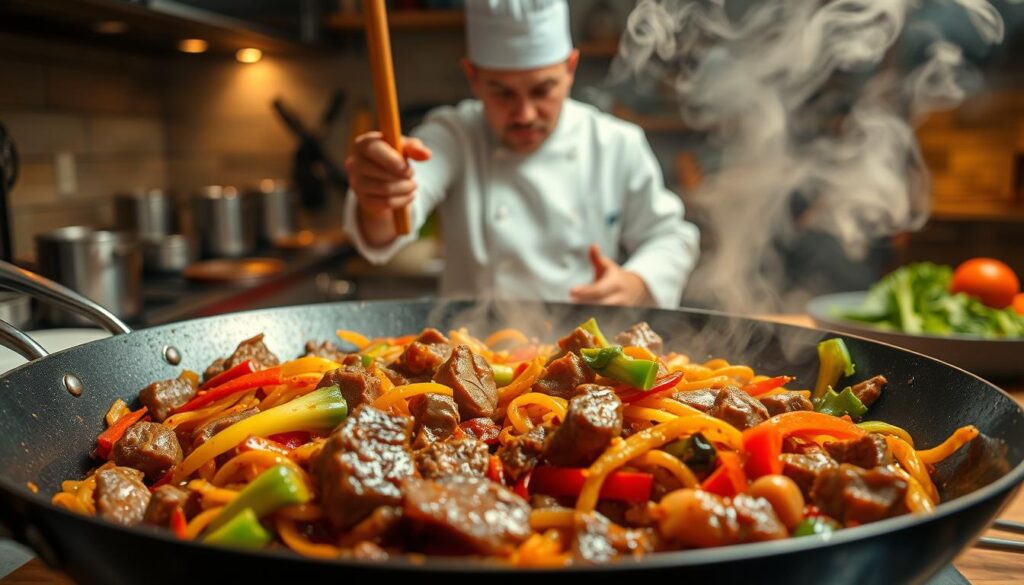
The secret to a great easy steak and noodle dish is mastering stir-fry. Your wok or large skillet must be very hot for that perfect wok hei flavor.
- Heat oil until it’s nearly smoking
- Sear beef quickly without moving it initially
- Stir-fry beef for 3-4 minutes until just cooked
- Remove beef and set aside
- Quickly stir-fry aromatics
- Add vegetables in order of cooking time
- Return beef to pan
- Toss with noodles and sauce
Pro tip: Keep ingredients moving but don’t constantly stir. Let them touch the hot surface for delicious caramelization. You want tender beef, crisp veggies, and noodles full of flavor.
Vegetable Mix-Ins and Customization Options
Making the perfect homemade lo mein with beef is all about finding the right vegetables. The right mix can turn your dish from good to amazing.
Your lo mein is a blank canvas for creativity. Here are some top vegetable picks for your Chinese noodle stir fry:
- Crunchy Vegetables:
- Bell peppers
- Carrots
- Water chestnuts
- Snap peas
- Earthy Options:
- Crimini mushrooms
- White button mushrooms
- Leafy Greens:
- Spinach
- Scallions
- Bean sprouts
For your homemade lo mein with beef, use about 6 cups of mixed veggies. Pro tip: Cut veggies into uniform, bite-sized pieces for even cooking.
| Vegetable Type | Cooking Order | Texture Contribution |
|---|---|---|
| Carrots, Broccoli | First | Crisp and Firm |
| Mushrooms | Middle | Tender |
| Spinach, Scallions | Last | Delicate |
You can customize your Chinese noodle stir fry easily. Just adjust veggie amounts, swap ingredients, or add chili paste for extra spice. Have fun and make it your own!
Tips for Making the Best Homemade Lo Mein with Beef
Making the perfect beef lo mein is more than just following steps. A few key techniques can make your steak lo mein truly special. Here are some insider tips to improve your cooking and ensure delicious results every time.
Common Mistakes to Avoid When Preparing Steak Lo Mein
Steak lo mein can be tricky, but knowing these common pitfalls will help you create a restaurant-quality dish at home:
- Insufficient Marinating Time: Always marinate your beef for at least 30 minutes, preferably overnight, to develop rich flavors
- Overcrowded Cooking Pan: Cook in batches to maintain high heat and achieve proper searing
- Low Cooking Temperature: Use high heat to create a beautiful caramelized exterior on your beef
- Overcooked Noodles: Slightly undercook noodles, as they’ll continue cooking when stir-frying
Smart Storage and Reheating Strategies
Your beef lo mein recipe can stay fresh and delicious with proper storage techniques:
- Refrigerate in an airtight container for 3-4 days
- Freeze for up to 3 months, understanding noodle texture might slightly change
- Reheat in a skillet with a splash of water or broth to prevent drying
- Microwave in 1-minute intervals, stirring between each cycle
Pro tip for your steak lo mein: Always prep ingredients before cooking and taste for seasoning at the end. These small steps make a significant difference in creating an authentic, delicious meal.
Conclusion
Making wok fried beef noodles at home turns a simple meal into a fun adventure. This recipe lets you make dishes as good as those in restaurants. You’ll learn to marinate beef, stir-fry at high heat, and make the perfect sauce.
This recipe is very flexible. First, follow the steps carefully. Then, try new ingredients and methods. Soon, making these noodles will become second nature, making your dinners a hit with everyone.
Starting your journey with authentic Chinese beef noodles is just the beginning. Every time you make wok fried beef noodles, you’ll get better. You’ll learn more about flavors and make meals that are as good as takeout. Cooking is about exploring, enjoying, and sharing great food with loved ones.
Take on the challenge, trust your instincts, and most importantly, have fun. Your homemade steak lo mein is waiting. It’s a delicious sign of your creativity and skill in the kitchen.