

Making the perfect Mongolian beef starts with learning how to slice beef thinly. This turns a regular steak into a dish fit for a restaurant. You’ll learn how to prepare the beef so it’s tender and tastes like it’s from a real Asian restaurant.
Professional chefs say thin sliced beef is key to a great Mongolian beef dish. By mastering the right cutting and preparation methods, you can make beef strips that are as good as those in your favorite restaurant.
Table of Contents
What Makes Mongolian Beef So Irresistibly Delicious
Mongolian beef has won over many with its amazing taste. It turns thinly cut beef into a dish to remember. The secret is the mix of sweet and savory flavors that excite your taste buds.
The dish’s charm comes from its special sauce mix. It turns simple beef into a meal fit for a restaurant. Here’s what makes this recipe stand out:
- Caramelized sugars that create a rich, glossy coating
- Umami-packed soy sauce providing depth
- Aromatic garlic and ginger adding complexity
The Perfect Flavor Chemistry
Cooking Mongolian beef is truly magical. The brown sugar caramelizes, making a sweet glaze that matches the savory soy sauce. Each piece of beef is a burst of flavor, with crispy outside and soft inside.
“Mongolian beef is like a symphony of flavors – sweet, salty, and utterly irresistible” – Chef Michael Chen
Restaurant-Quality Cooking at Home
Many think making Mongolian beef at home is hard. But, it’s actually easy with the right steps. The trick is to prepare your beef well and know how heat changes simple ingredients into something amazing.
| Ingredient | Flavor Role |
|---|---|
| Brown Sugar | Creates sweet caramelization |
| Soy Sauce | Provides umami depth |
| Garlic & Ginger | Adds aromatic complexity |
With just 30 minutes and basic kitchen skills, you can make a meal that will wow your family and friends.
Choosing the Right Cut of Beef for Your Mongolian Beef
Choosing the right beef cut is key to making a delicious Mongolian beef dish. The meat you pick affects the dish’s texture, taste, and success.
For sukiyaki beef or sliced sirloin, consider these top beef cuts:
- Flank Steak: The top choice for Mongolian beef, with lean texture and strong flavor
- Top Sirloin: Offers tender texture and easy slicing
- Skirt Steak: A great alternative with similar qualities to flank steak
- Ribeye Steak: Provides rich flavor and tender meat
Experts say to choose cuts that are tender and can handle high heat. Sliced sirloin is a good pick, as it’s tender and easy to slice. Stay away from thick cuts like chuck or round, as they need long cooking to soften.
Pro tip: Always slice your beef against the grain to ensure maximum tenderness in your Mongolian beef dish.
When buying beef, look for fresh, high-quality cuts with little connective tissue. The best cut should be thin for quick cooking and keep its juiciness. Using sukiyaki beef techniques can help you slice the meat thinly, making it soak up marinades and sear well.
How to Prepare Thin Sliced Beef Like a Professional Chef
Turning regular beef into thin slices like a pro takes skill and precision. Chefs use special techniques to make the meat so tender it just melts. This is true for both carpaccio beef and beef shabu shabu.
Getting good at thin slicing isn’t just about having a sharp knife. It’s also about knowing how to handle the meat. Using the right techniques can really boost your cooking skills.
The Freezer Trick for Perfect Slicing
A simple trick in the freezer can help you get those super thin slices. Here’s how to do it:
- Put your beef in the freezer for 15-30 minutes
- Take it out when it’s firm but not frozen solid
- The meat should be solid at the edges but still a bit soft
This trick makes the meat easier to slice evenly. It’s a secret used by chefs for dishes like beef shabu shabu.
Slicing Against the Grain for Maximum Tenderness
Knowing how to slice meat against the grain is key for tender beef. Here’s how to do it right:
- Find the direction of the muscle fibers
- Hold your knife at a right angle to these lines
- Then, slice into thin strips, about 1/4 inch thick
By slicing against the grain, you make the meat tender. This way, every bite of carpaccio beef or stir-fry is soft and easy to chew.
Pro tip: This method is especially good for cuts like flank or skirt steak, where the fibers are more noticeable.
Essential Ingredients for Authentic Mongolian Beef Sauce
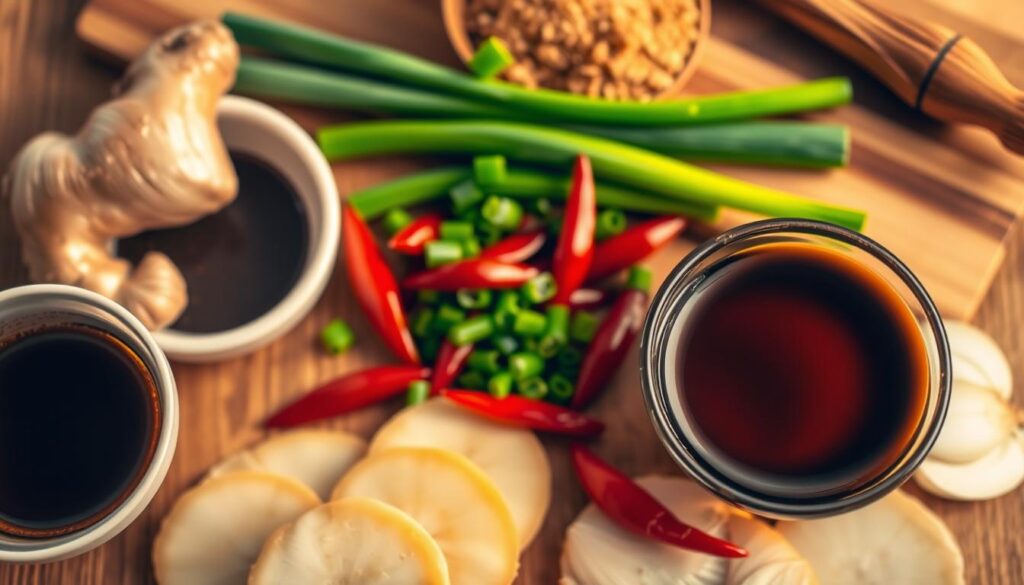
Making the perfect sauce for your deli beef slices can turn a simple meal into a special treat. The secret is in choosing the right mix of ingredients. They should balance sweet, savory, and umami flavors.
Your Mongolian beef sauce needs a special set of ingredients. They add depth and complexity to the thin sliced beef. Start with these key components:
- Low-sodium soy sauce (1/2 to 1 cup) – The flavor foundation
- Brown sugar or coconut sugar (1/3 to 1 cup) – For caramelized sweetness
- Fresh garlic (4 cloves, minced) – Adds aromatic punch
- Fresh ginger (1-2 teaspoons, grated) – Provides zingy undertones
Professional chefs suggest a few extra ingredients to make your sauce even better:
- Sesame oil (1-2 teaspoons) – Adds nutty depth
- Rice wine vinegar (1 tablespoon) – Introduces subtle brightness
- Sriracha or red pepper flakes – For those who enjoy a spicy kick
“The right sauce can transform simple deli beef slices into a restaurant-quality masterpiece.”
Getting this sauce right means knowing how each ingredient affects the taste. It’s all about finding the right balance. This balance will make a glaze that sticks perfectly to your beef strips.
The Cornstarch Coating Method for Crispy Thin Sliced Beef
To make your rare roast beef crispy like Mongolian beef, you need a special trick. A simple cornstarch coating does the trick. It makes the outside crunchy and keeps the inside tender and full of flavor.
Achieving Even Coverage Without Excess Batter
Professional chefs use a reliable method to coat beef perfectly. Here’s how to get that perfect crispy texture:
- Measure 1/4 to 1/2 cup of cornstarch for 1-2 pounds of beef
- Use a large Ziploc bag for maximum coating efficiency
- Seal and shake the bag to distribute cornstarch evenly
- Shake off excess cornstarch in a colander to prevent clumping
Why Cornstarch Creates the Perfect Crispy Texture
Cornstarch is different from flour because it’s pure starch. It turns your rare roast beef into a culinary masterpiece. When heated, it makes a delicate, crunchy shell that:
- Protects the meat from overcooking
- Provides a textural contrast
- Helps sauce cling to each beef strip
- Prevents the meat from becoming tough
Pro tip: The key is a light, even coating that crisps up beautifully without creating a heavy, gummy exterior.
Cooking Techniques for Perfectly Seared Beef Strips
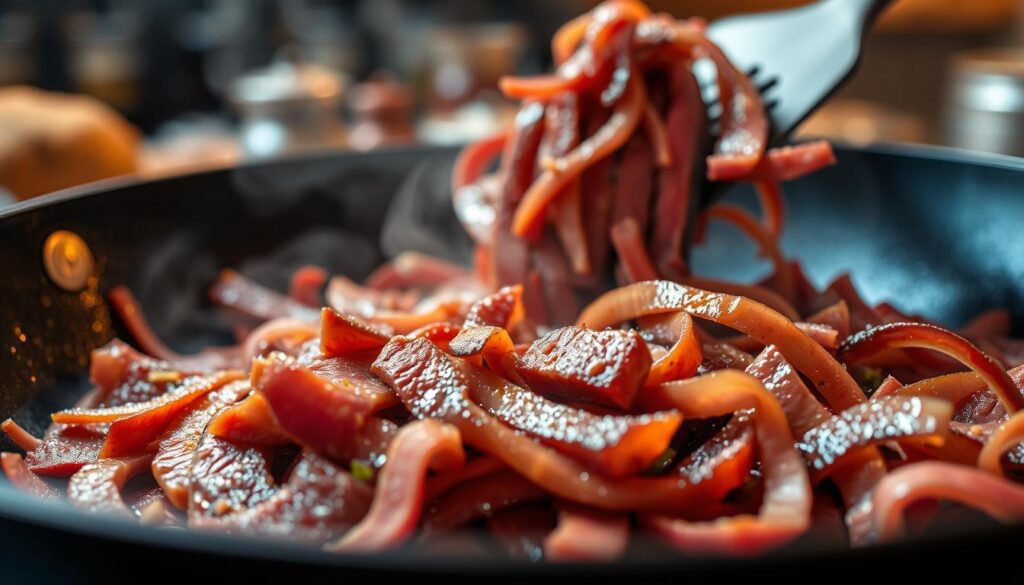
To turn thin sliced beef into a top-notch dish, you need to master high-heat cooking. The right method can make all the difference. It turns soggy meat into crispy, caramelized perfection.
Choosing the right cooking tools is key. Use a heavy-bottomed cast iron skillet or a stainless steel pan. These can handle high heat. Stay away from non-stick pans that can’t handle the heat.
Essential Cooking Tips for Beef Strips
- Select high-smoke-point oils like avocado, vegetable, or peanut oil
- Heat oil to medium-high temperature
- Test oil readiness with a water droplet test
- Cook beef in small batches to maintain high heat
For perfect searing, control your cooking surface temperature. When adding beef strips, they should sizzle right away. Cook each batch for 30 to 60 seconds per side. This creates a golden-brown crust that makes your sandwich meat gourmet.
Pro tip: Don’t overcrowd the pan – this drops the temperature and causes steaming instead of searing!
Work fast and with confidence. Remove each batch to a plate while cooking the rest. Add more oil between batches if needed. Your goal is a crispy outside and a juicy inside that will wow any home chef.
Bringing It All Together: Sauce and Beef Combination
Making perfect Mongolian beef is all about timing and skill. Your thin sliced beef is ready. Now, it’s time to mix the sauce and meat for a dish that will wow your guests.
The last step in cooking Mongolian beef needs precision. You aim for a glossy, tasty sauce that sticks well to the beef.
Timing Your Sauce Reduction
Reducing the sauce is key to making your dish amazing. Here’s what to do:
- Reduce pan heat to medium
- Pour in prepared sauce
- Simmer for 4-5 minutes
- Watch for slight thickening
Coating Every Piece for Maximum Flavor
To glaze each piece of beef perfectly, follow these steps:
- Return all beef strips to the pan
- Toss continuously for 1-2 minutes
- Ensure even sauce distribution
- Add green onions at the very end
“The secret is in the final 2 minutes of cooking – that’s where the magic happens!” – Professional Chef
Your hard work and careful steps will pay off. You’ll get a Mongolian beef dish that’s full of flavor. The trick is to cook fast, keeping the beef crispy and the sauce evenly spread.
Serving Suggestions and Pairing Ideas for Mongolian Beef
Turn your shaved beef steak into a top-notch meal with these expert tips. The right sides can make your Mongolian beef a feast for the senses.
Perfect Bases for Your Shaved Beef Steak
- Steamed white rice
- Ginger-infused rice
- Quinoa
- Ramen noodles
- Lo mein or chow mein noodles
- Rice noodles
- Fried rice
Vegetable Companions
Pair your shaved beef steak with colorful veggies for extra nutrition and texture:
- Stir-fried garlic green beans
- Garlic ginger bok choy
- Roasted broccoli
- Sautéed cabbage
- Asian cucumber salad
- Asian slaw with sesame miso dressing
Wine Pairings and Garnishes
| Wine Type | Flavor Profile |
|---|---|
| Zinfandel | Fruity red wine with bold character |
| Grenache | Rich, spice-friendly red wine |
| Riesling | Off-dry white wine with versatile pairing potential |
Top your dish with sesame seeds and chopped green onions. This adds a real touch that looks great and tastes even better.
Choosing the right sides will make your Mongolian beef look amazing and taste incredible.
Conclusion
You’ve learned how to make restaurant-quality Mongolian beef at home. It’s easier than you thought. You now know how to pick the right cut and how to coat it with cornstarch.
Keeping your Mongolian beef fresh is important. Store it in an airtight container in the fridge for 3 to 4 days. Freeze it for up to 3 months if you want to keep it longer. Reheat it in the microwave or a skillet to keep it crispy.
These skills are not just for Mongolian beef. They open the door to making many stir-fry dishes. Try new flavors, adjust the spice, or add your favorite veggies. Your Mongolian beef can be as good as any restaurant’s.
Great cooking comes from practice and confidence. Every time you make this dish, you’ll get better. Your kitchen is now a place for endless culinary adventures, starting with delicious Mongolian beef.