
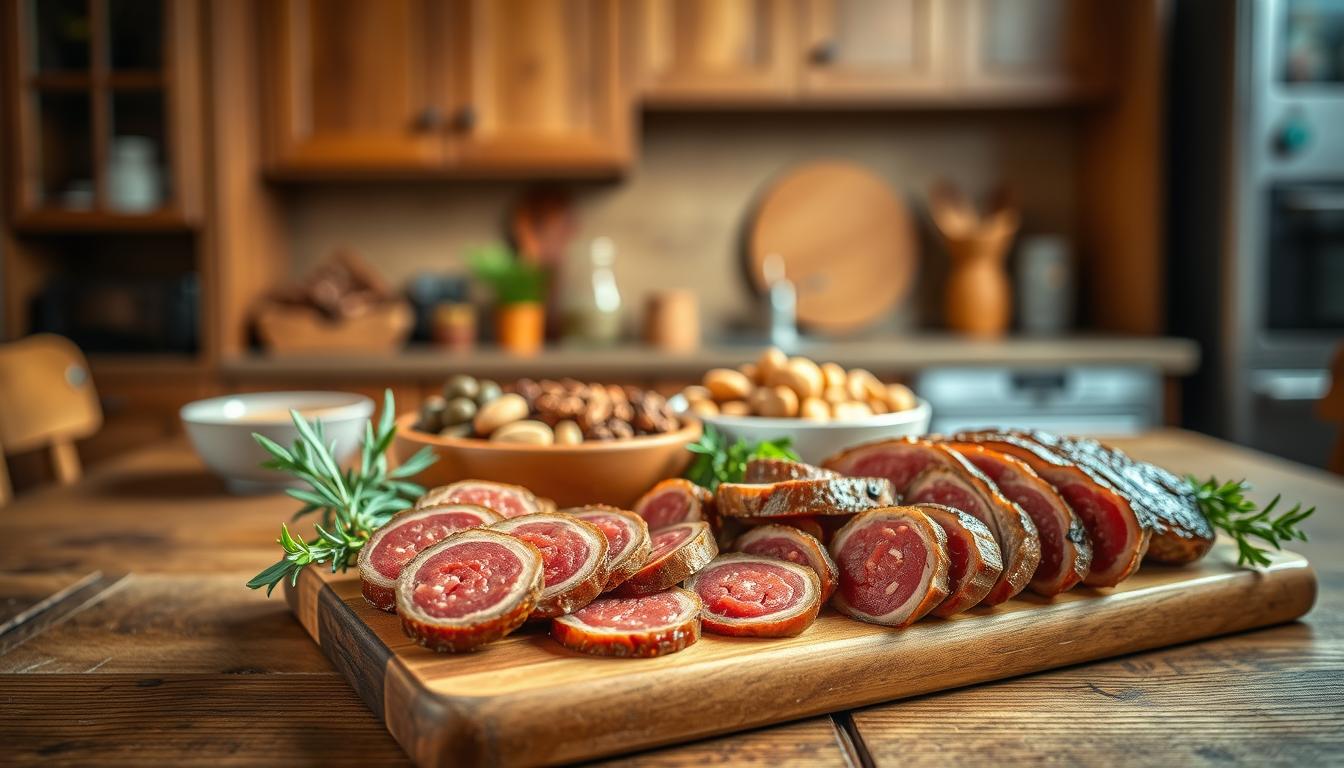
Wild game snacks have changed the protein market, with venison meat sticks leading the way. These snacks mix traditional hunting with today’s health needs. Made from deer meat, they offer a lot of protein and few carbs, appealing to health fans and outdoor lovers.
These snacks are becoming more popular fast. With about 7 grams of protein per ounce, they’re a healthy snack choice. Their low-carb nature is great for those on keto, paleo, or whole food diets.
From gym-goers to adventure seekers, venison meat sticks are a top protein pick. Each bite is packed with nutrients, linking today’s diet to our ancestors’ ways.
Table of Contents
What Are Venison Meat Sticks and Why Are They Growing in Popularity
Venison meat sticks are a mix of old nutrition and new trends. They come from ancient hunting days when keeping meat fresh was key. This was crucial for survival.
The story of venison treats is one of human ingenuity. Early hunters found ways to keep meat good for a long time. This led to today’s venison meat sticks.
The Origins of Venison as a Traditional Protein Source
Wild game was vital for humans to grow. Studies show that animal protein helped our brains grow. Before farming, hunters and gatherers ate mostly game meat.
- Protein-rich diet supported human brain development
- Hunting skills were crucial for survival
- Preservation techniques ensured long-term food sustainability
Modern Wild Game Snacks for Health-Conscious Consumers
Now, venison meat sticks are for those who want healthy protein. They are made with little processing. The meat is from grass-fed deer, seasoned with natural spices.
People like venison meat sticks for several reasons:
- They have low fat
- They are high in protein
- They fit with paleo and keto diets
- They have few artificial ingredients
The rise in venison treats shows a shift in how we see food. It’s not just for eating; it’s about quality, ethics, and tradition.
The Complete Nutritional Profile of Venison Meat Sticks
Protein-rich deer sticks are a nutritional powerhouse. They offer a great mix of nutrients that help with health and fitness. This makes them stand out from regular meat snacks.
Each serving of these deer sticks is packed with nutrients. Here’s what you can find in one serving:
- Protein Content: About 7 grams per 28-gram serving
- Calories: Only 80 calories per serving
- Fat: 5 grams, mostly lean protein
- Carbohydrates: Just 1 gram per serving
The micronutrients in venison meat sticks are also impressive. These snacks are full of minerals that help your body work well.
| Mineral | Amount per Cup | Daily Value |
|---|---|---|
| Iron | 8.5mg | 47% |
| Potassium | 847.5mg | 18% |
| Calcium | 84.7mg | 6% |
What’s special about these deer sticks is their nutrient density. They have 58.5% fat, 36.3% protein, and just 5.2% carbs. This makes them great for low-carb and keto diets.
Nutrition isn’t just about numbers—it’s about choosing quality fuel for your body.
Remember, they have a lot of sodium, so eat them in moderation. These venison meat sticks are a healthy snack that combines old ways of preserving with today’s nutritional needs.
High-Protein Content: How Venison Sticks Support Your Fitness Goals
Athletes and fitness fans are finding out about the power of high-protein snacks. Protein-rich deer sticks are changing the game for those looking for lean, nutrient-dense food.
Venison meat sticks are a top-notch protein source. They offer great nutritional benefits for muscle growth and recovery. These deer sticks have more protein than most snacks.
Protein Density Compared to Traditional Beef Jerky
Venison meat sticks have a clear edge in protein content:
- Approximately 7.0g of protein per 28g serving
- Delivers 118% of daily protein value per cup
- Contains 22% more protein than grass-fed and grain-fed beef
| Protein Source | Protein per 28g | Fat Content |
|---|---|---|
| Venison Meat Sticks | 7.0g | Low |
| Traditional Beef Jerky | 5.7g | Moderate |
Essential Amino Acids in Wild Game Meat
Venison has all nine essential amino acids your body needs. It’s packed with branched-chain amino acids like leucine, isoleucine, and valine.
These protein-rich deer sticks help your body recover faster, keep energy up during workouts, and control hunger. They’re a better snack choice for anyone, whether you’re a pro athlete or just enjoy working out.
Fat Content and Omega Fatty Acid Balance in Grass-Fed Venison Jerky
Exploring grass-fed venison jerky reveals a unique fat profile. Wild deer, raised in stress-free environments, have a fatty acid mix that boosts health.
The fat in grass-fed venison jerky offers several nutritional benefits:
- Approximately 5.0g of fat per 28g serving
- Superior omega-3 to omega-6 fatty acid ratio
- Up to 64 times more beneficial healthy fats compared to grain-fed beef
Research from Utah State University shows wild venison’s high nutrient density. Axis deer, eating diverse native plants and volcanic soils, have meat with an amazing fatty acid mix. This diet boosts CLA and omega-3s, good for heart and metabolism.
“The quality of fat matters as much as the quantity.” – Nutrition Expert
Your body gains from grass-fed venison jerky’s balanced fats. Unlike processed snacks, these meat sticks match your body’s natural needs. The stress-free hunting keeps the fatty acids intact, giving you a clean, nutrient-rich protein.
Vitamins and Minerals: The Micronutrient Advantage of Deer Meat
Organic game meat is packed with nutrients that make it stand out. Venison sticks are full of vitamins and minerals that boost your health.
Essential Nutrients in Wild Game Protein
Venison sticks are a treasure trove of nutrients. They offer key elements that keep your body running smoothly:
- Iron: Helps carry oxygen and energy
- Zinc: Strengthens your immune system and fixes cells
- B Vitamins: Speed up metabolism and turn food into energy
Nutrient Density from Wild Foraging
Deer eat a wide range of plants, making their meat very nutritious. This natural diet gives organic game meat a richer nutrient profile than farm-raised meat.
Studies reveal that wild venison has more antioxidants. Axis deer eating native plants have a better nutrient mix than regular meat.
Nature’s diet creates superior nutrition through diverse, natural feeding patterns.
Choosing venison sticks means you get a protein that’s full of nutrients with little processing.
Venison Meat Sticks vs. Beef Jerky: A Head-to-Head Comparison

Choosing between grass-fed venison jerky and traditional beef jerky is a big decision. It’s important to know the differences. This can help you pick the best snack for your diet.
Grass-fed venison jerky has big nutritional benefits. It has less fat and more protein than beef jerky. A study found venison has:
- 22% more protein
- 2-4 times more antioxidants
- 8-64 times more healthy fatty acids
The taste of venison jerky is different from beef jerky. It has a richer, gamey flavor. This makes it a favorite among those who like to try new things. It’s also leaner, with fewer calories.
Think about these points when picking your snack:
- Nutritional density – Venison is better for nutrients
- Price point – Venison is pricier because it’s harder to find
- Ecological impact – Wild venison is better for the environment
Your health goals and taste preferences will decide. Both jerky types are good for protein. But venison is more packed with nutrients for those who care about nutrition.
How Venison Compares to Elk Meat Sticks and Other Wild Game Snacks
Wild game snacks open up a world of nutrition and taste. Elk meat sticks and venison stand out as top choices for those looking for healthy protein. They offer special benefits for health-conscious eaters.
When we look at elk meat sticks versus venison, some key differences pop up. These help you decide which wild game snack is best for you:
- Protein Content: Elk has a bit more protein per ounce than venison
- Flavor Profile: Elk tastes milder, making it great for newcomers to game meats
- Fat Composition: Venison is leaner with less fat overall
Exploring the Wild Game Snack Spectrum
There’s more to wild game snacks than just elk and venison. Here are some other interesting options:
- Bison: It’s packed with iron and B vitamins
- Wild Boar: It has a richer flavor and unique fat profile
- Antelope: It’s an extremely lean protein source
These wild game snacks are all special in their own ways. They are raised without growth hormones and are more sustainable. They also have amazing nutritional profiles. Your choice depends on what you like, what’s available, and your dietary goals.
Wild game snacks offer a nutritional adventure beyond traditional protein sources, providing both exceptional flavor and health benefits.
Understanding Preservatives: Nitrate-Free and Organic Options
Exploring preservative-free venison snacks means learning about food preservation. Old methods used salt, smoke, and drying. But today, many products use synthetic preservatives to last longer and look better.
Nitrate-free venison snacks are popular among those who want healthier options. These snacks avoid artificial preservatives. Instead, they use natural ingredients and new ways to keep food fresh.
- Natural preservation methods include:
- Vacuum sealing
- Careful moisture control
- Refrigeration
- Key considerations for preservative-free venison:
- Shorter shelf life
- Refrigeration requirements
- Minimal ingredient lists
When picking preservative-free venison, check the labels. Look for products with just meat, sea salt, and spices. Good options will not have synthetic additives or too much sugar.
| Preservation Method | Pros | Cons |
|---|---|---|
| Synthetic Preservatives | Long shelf life | Potential health concerns |
| Natural Preservation | Cleaner ingredients | Shorter storage duration |
| Vacuum Sealing | Minimal chemical intervention | Requires specialized packaging |
Your choice between convenience and clean ingredients depends on your health goals. Nitrate-free venison snacks are a better choice for those who want less processed food.
Dietary Considerations: Keto, Paleo, and Whole30 Compatibility
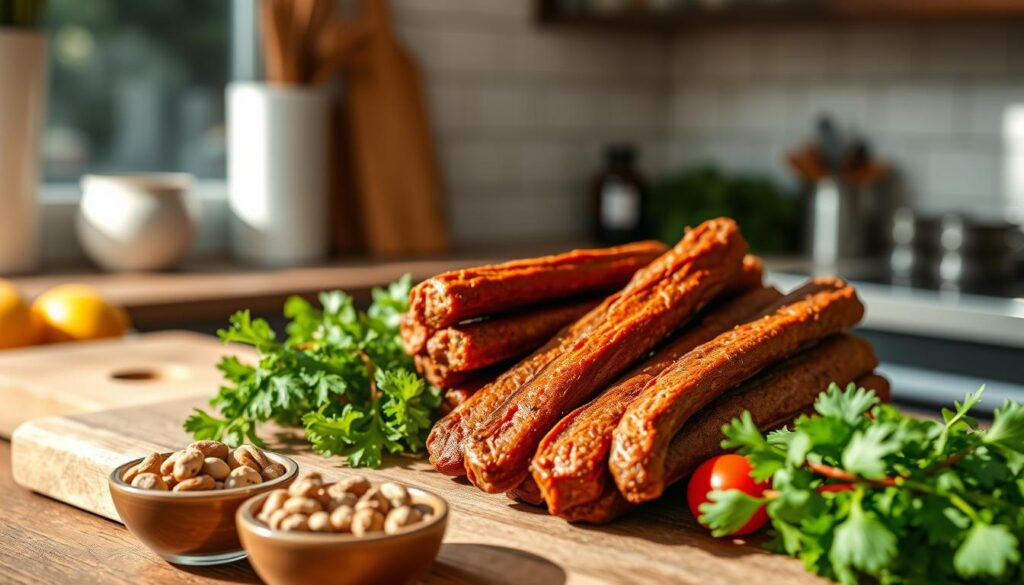
Finding the right diet can be tough, but preservative-free venison meat sticks make it easier. They are packed with nutrients and fit well into many diets. This makes them a great choice for those who are always on the go.
Low-Carb Benefits for Ketogenic Dieters
Ketogenic dieters will love the preservative-free venison sticks. They have very few carbs—only 1 gram per serving. This helps keep you in ketosis without losing out on nutrition.
- Extremely low carbohydrate content (1g per serving)
- High-quality protein supporting muscle maintenance
- Zero sugar to maintain metabolic ketosis
Clean Eating and Preservative-Free Venison Treats
Whole30 and paleo followers will be happy with these clean eating protein sources. The preservative-free venison sticks follow the principles of ancestral nutrition. They have simple ingredients that fit well with natural diets.
- Simple ingredient lists
- Wild game protein source
- No artificial preservatives
- Compliant with strict dietary protocols
Choosing preservative-free venison means picking a snack that supports your health goals. It also tastes great and is of high quality.
Selecting Quality Venison Meat Sticks: What to Look for on Labels
Finding the right organic game meat can be tough. When picking venison meat sticks, knowing how to read labels is key. This helps you find snacks that are both tasty and healthy.
When checking out nitrate-free venison snacks, keep an eye on these things:
- Ingredient list transparency
- Meat sourcing information
- Preservative content
- Sodium levels
Choose snacks with simple ingredients. The best organic game meat sticks usually have:
- Pure venison meat
- Natural spices
- Sea salt
- Just a few preservatives
Watch out for added sugars, artificial preservatives, and too much sodium. Brands that are open about where they get their meat and how they process it are usually the best.
“Quality is not an act, but a habit in selecting nutritious snacks.” – Food Nutrition Expert
When buying nitrate-free venison snacks, look for brands that:
- Use wild-harvested or grass-fed meat
- Have clear ingredient lists
- Source their meat ethically
- Keep sodium levels low
Investing in top-notch organic game meat snacks is worth it. They offer better nutrition and support clean eating. Always take the time to read labels and pick snacks that fit your health goals.
Best Uses for High-Protein Hunting Snacks and Natural Venison Treats
Natural venison treats are a big hit with outdoor lovers and health buffs. These snacks are packed with protein and are super versatile. They fit into many parts of your life.
When you’re out exploring, you need snacks that are both tasty and full of energy. Venison meat sticks are perfect for this. They give you energy without being too heavy, making them great for any activity.
- Hiking and backpacking nutrition
- Post-workout protein recovery
- Emergency desk drawer snacks
- Road trip provisions
- Camping and fishing excursion protein
But these snacks aren’t just for the outdoors. You can also use them in your daily meals. Here’s how:
- Chopping into salads for protein boost
- Creating charcuterie board appetizers
- Adding to scrambled eggs
- Pairing with cheese and fruit
“Venison sticks are the ultimate nutrition insurance when healthy options aren’t available.”
It’s important to know how much to eat. One to two sticks give you 7-14 grams of protein, which is great for a quick snack. Three to four sticks can be a light meal with veggies or healthy fats.
| Scenario | Recommended Sticks | Protein Range |
|---|---|---|
| Quick Snack | 1-2 sticks | 7-14g |
| Light Meal | 3-4 sticks | 21-28g |
Your high-protein snacks are more than just food. They’re a smart choice for an active lifestyle. Convenience, nutrition, and taste come together in these easy-to-carry protein sources.
Conclusion
Venison meat sticks are more than just a snack. They are packed with nutrients and connect us to traditional eating. These snacks have high protein, essential vitamins, and clean ingredients. They stand out from regular processed snacks.
Choosing venison meat sticks means you’re picking a top-notch protein. They fit many diets, from keto to paleo, and are great for athletes and outdoor lovers. Brands like Nick’s Sticks and Maui Nui show how wild game proteins can be made well.
Starting with venison meat sticks can change how you see snacks. Focus on quality and know what’s in them. You’ll find a snack that’s not just filling but also supports your health and sustainable food.
Ready to improve your nutrition? Look for good venison meat sticks, try different brands, and choose snacks that are good for you and the planet.